There is a deep underlying paradox clenching the heart of India’s clean energy ambition.
The country wants to expand its solar storage, reduce dependence on fossil fuel imports, and build electric vehicles (EVs).
However, the lithium that forms the core component of these batteries has, in some form, passed through a Chinese refinery first.
Show Full Article
India has an overarching ambition of a clean energy future by 2047, yet it does not have control over the materials that its future depends on.
The stakes
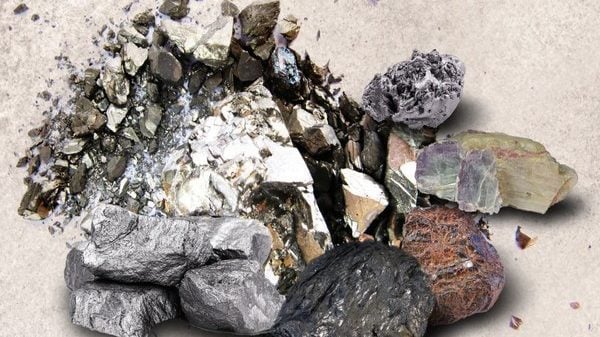
Lithium, nickel, cobalt and rare earths are the critical minerals that are found inside every modern infrastructure, from EVs to electronic gadgets, permanent magnets, defence equipment, the medical industry, etc.
Global demand for these minerals is surging. For instance, lithium demand alone could grow by more than four times its current size by 2040. Today, access to these strategic critical minerals is no longer confined to a market question but has become a matter of national security.
The China contrast
China understood the significance of these critical minerals earlier than most. Accordingly, over the past two decades, it has has built a complete ecosystem surrounding the critical mineral supply chain.
Today, China controls the entire value chain from extraction to processing and manufacturing batteries and EVs. According to the International Energy Agency (IEA), China commands 72 percent of world’s refined critical minerals and 85 percent of refined rare earths as of 2026.
Moreover, China’s state-owned and influenced industries along with its mega infrastructural projects like the Belt and Road Initiative (BRI), have played a substantial role in securing access to critical minerals and has helped build a resilient supply chain. It exercises near-absolute dominance over the supply chain, which most countries, including India, either struggle to build or have remained confined to mining.
India’s actual problem
India is not absent from this race. In recent years, it has signed multiple Memorandum of Understanding (MoUs) with Australia, Brazil, United States, Saudi Arabia and Argentina to secure a reliable supply chain. It has also auctioned mineral blocks at home in states of Gujarat, Chhattisgarh, Karnataka, Jammu and Kashmir etc. However, intent and capacity are not analogous. India has not yet built the capacity to refine where the real value lies.
This is the trap. Securing or auctioning minerals does not reduce import dependency on China. A country endowed with rich natural resources can still have no control and remain underdeveloped as it cannot turn those resources into something that factories can use and process into products of higher value.
Countries like India that do not hold such capacity simply falls into the trap of net importer of refined battery minerals. Therefore, the real bottleneck lies in lack of industrial and technical capacity to refine these minerals.
Additionally, the absence of necessary specialized skill, lack of investment owing to long gestation period, inadequate technology and a lack of coordinated strategy for fast moving regulatory clearances are some of the other reasons for this persistent trap.
What needs to change
None of this means that India’s effort so far has been wasted. The exploration and mining are the necessary steps, but it accounts only for 10 percent value of the entire supply chain. Clean energy ambition would be achieved only by building processing and refining capacity, which is exactly what China focuses on to extract maximum value from the supply chain. Lacking such capability would create a new form of dependency just like the oil dependency on West Asia, but now it would be on China for critical minerals.
Therefore, what India needs is a shift in priority from mining blocks to actually building processing capacity. This would require diffusion of technology, upgradation of technical skills among the workforce, encouragement of private investment and robust control and clearance mechanisms.
Additionally establishing this midstream capability would help in mitigating geopolitical risk as refining is highly concentrated in a few nations, ensuring national and economic security as critical minerals are foundational to the medical, defence and energy.
Domestic processing would also create higher value products and generate industrial employment and lastly advanced processing infrastructure would also ensure a close loop circular economy as it makes recycling viable and profitable.
The recent budgetary steps and flagship policy of National Critical Mineral Mission (NCMM) 2025 is a good head start but whether this translates in actual refining capacity will decide India’s future to overcome the dependency trap.
India does not lack critical minerals; it lacks ambition. It needs to realize that while mining makes headlines, refining builds power. Until it treats both stages equally it would not actualize its clean energy future.
Madhurima Dey is a student of MA (Political Science) at Delhi University. Views are personal.
Also Read: Why does everyone in India feel entitled to teach morality?