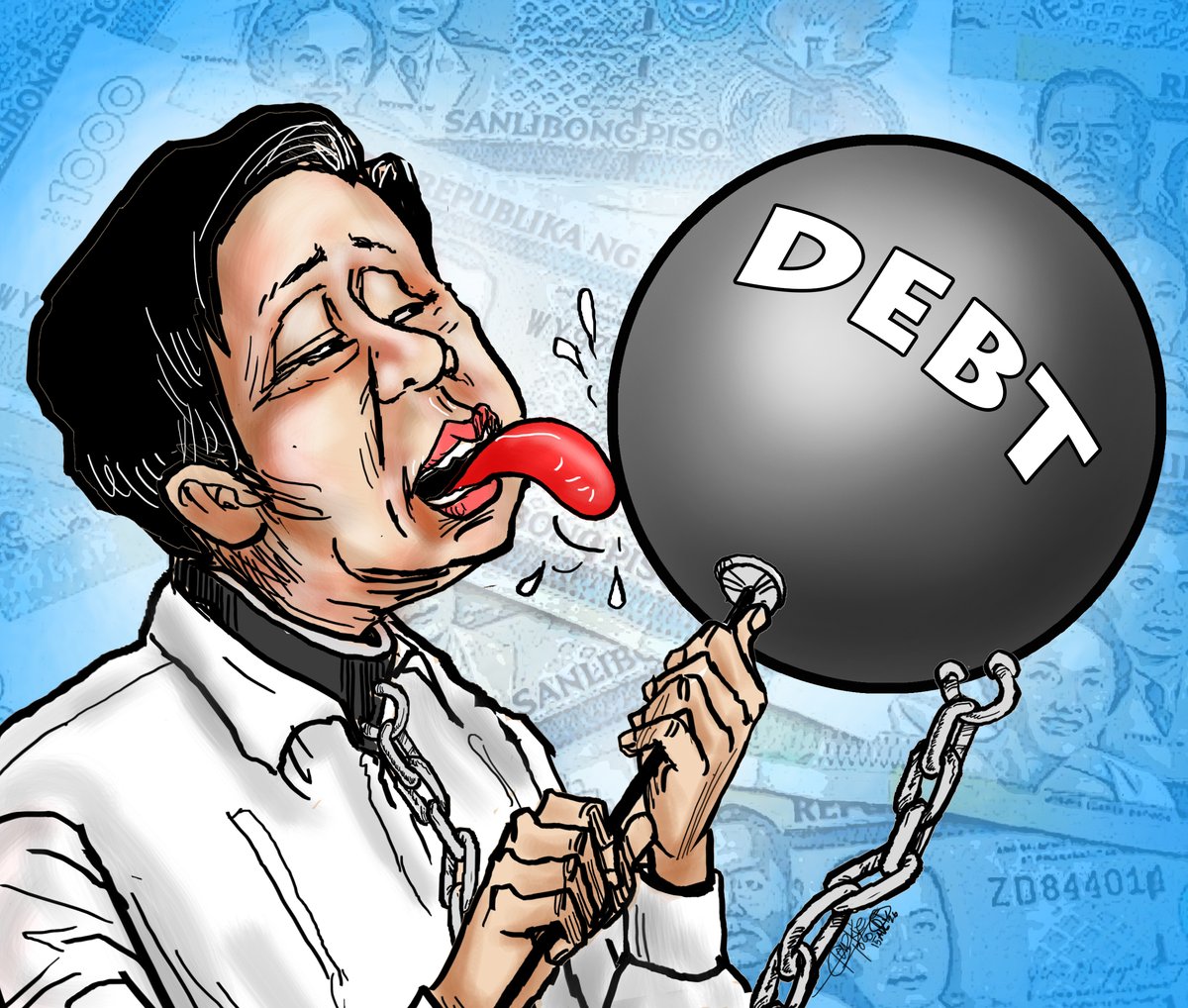
Stack the debt service on top of other mandatory and automatically appropriated items such as the wages of public servants and the overhead to run government, and more than 60 percent of the budget is already spoken for before Congress debates a single peso of it.
The fiscal space — the room where a government actually chooses what kind of country it wants to build — has shrunk to a sliver, and an administration facing an election year in 2028 gives another dimension to its priorities.
The government plans to borrow another P1.7 trillion to cover this year’s deficit. Add to that last year’s P1.6-trillion shortfall, and the national debt climbs toward P22 trillion.
The debt-to-gross domestic product (GDP) ratio, already at 66 percent, a 22-year high, will cross 70 percent. To put it bluntly, half of what government collects in taxes now goes to debt payments.
The state is not investing in its people but in servicing its lenders, most of them domestic banks, at 80 percent.
The Department of Budget and Management (DBM) heralded the 2027 national budget proposal as a potential shield against an oil crisis and a war in the Middle East.
Marcos’ track record does not support the claim, since the fiscal plan is always reliant on debt, and the only strategy is to borrow first and explain later.
Despite the heavy reliance on loans, GDP growth fell to 2.3 percent in the second quarter, the weakest showing in years, raising the specter of stagflation among economists as commodity prices remain precariously high.
The annual appropriations have swollen from an average of under P4 trillion during the last administration to over P7 trillion today.
Fixed capital formation, the investment that builds factories, ports and irrigation systems, contracted last year. Increased spending should translate to building more, but public funds are spent mostly on dole-outs under the Ayudanomics principle.
Throw the people bread crumbs to keep them quiet while those in power haul away suitcases of cash.
More than P800 billion vanished into flood control projects that were either never constructed or built to fail.
The President has said that P800 million has been recovered, which is one-tenth of one percent of the loss. But nothing has been recovered from the contractors who pocketed the rest.
Yet next year’s budget asks the same taxpayers, already carrying 66 percent of GDP in national debt, to fund flood control again, without a guarantee that the allocated funds will not be wasted as in the failed EDSA rehabilitation.
Woe to the next administration that will inherit the debt and to the next generation of Filipinos who will have to pay it.