
The China-EU trade consensus has meaning beyond a list of commodities, tariffs and various restrictions. Two of the world’s largest trading powers have chosen to engage inside the rules instead of maneuvering outside them. It’s an example that quietly draws a bottom line for global trade.
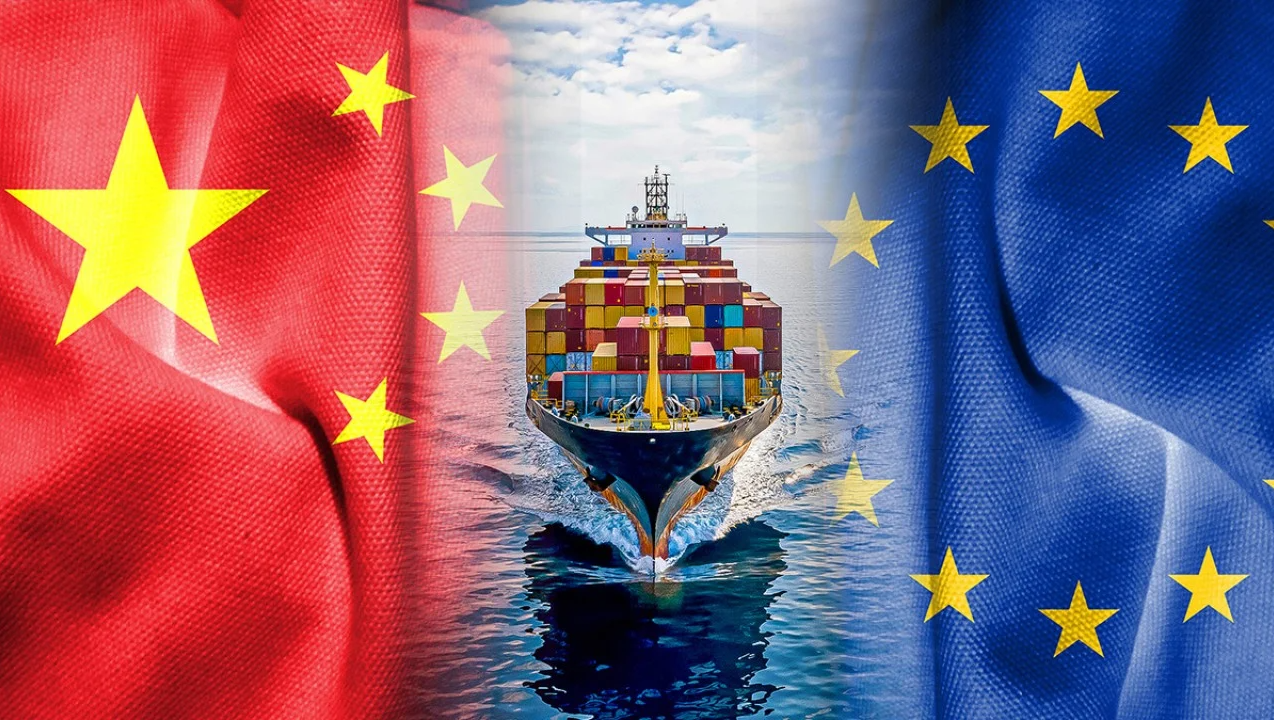
There is an unmistakable sense of relief among seasoned trade-policy analysts after the conclusion of the China-EU trade and investment consultations recently.
For months, two of the world’s three largest trading powers had drifted dangerously close to a full-blown trade war. Sharp disputes over a proposed hybrid vehicle import quota, rare-earth export controls and a huge trade deficit had poisoned bilateral commercial relations. Senior political figures in Paris and Berlin publicly floated proposals for fast-track import restrictions targeting Chinese manufactured goods, while powerful European manufacturing lobbies campaigned aggressively for tougher unilateral tools. Billions of euros in cross-border sales hung in the balance.
Against this high-stakes backdrop, the joint communique emerging from Beijing on Oct. 9 delivered a substantial package of practical de-escalatory outcomes. Both sides will continue to explore tariff cuts on selected goods and agreed to establish a permanent dialogue mechanism for green-industry cooperation. They reached an understanding on hybrid vehicle trade and agreed to continue price-undertaking and review procedures in the existing EV anti-subsidy case instead of escalating to new tariffs. On supply chains, Beijing offered a “green channel” for rare-earths and permanent-magnet export permits, while Brussels promised to expedite dual-use export license cases with member states.
But the strategic prize of the agreement is the World Trade Organization anchor. Valuable as the transaction-focused gains are, the agreement’s most far-reaching provision lies in its explicit political undertaking to anchor all ongoing and future China-EU trade disputes firmly in WTO rules, with formal WTO dispute-settlement procedures recognized as the sole legitimate mechanism for resolving cross-border commercial disputes.
In isolation, this consensus might seem like procedural housekeeping. In context, however, it is a quiet but decisive victory for multilateral trade governance nd a practical buffer against the kind of friction that has spilled over into broader geopolitical conflicts.
Consider the timing. At the G20 Trade Ministers Meeting, which concluded on Oct. 1, the U.S. trade representative called for revisiting the most-favored-nation principle—the bedrock of non-discrimination—effectively seeking to legalize a world in which tariffs are set bilaterally rather than multilaterally. If the MFN principle erodes, the global trading system reverts to the law of the jungle. Against that backdrop, the recognition by China and the EU (together accounting for roughly one-third of global GDP) that the WTO is the sole legitimate arbiter of trade disputes was uniquely significant. It signals that the world’s No. 2 and No. 3 economies stand together to uphold the rules-based order, even as Washington moves to dismantle it from within.
By reaffirming WTO discipline as their shared benchmark, China and the EU delivered a much-needed substantive boost to a fraying global economic order. Going forward, any contested legislative text or regulatory proposal originating from either side is to be measured against established WTO rules. Moreover, policy measures that violate multilateral norms either in form or substance would carry significantly higher diplomatic and reputational costs.
The consensus also serves as a corrective to the EU’s own drift toward protectionist unilateralism. Brussels has spent years packaging protectionism in the language of security, resilience and green goals.
Three cases highlight the frictions. First, proposals for a voluntary export-restraint arrangement intended to cap Chinese hybrid vehicle market share at 15 percent would create de facto quantitative import limits in direct violation of GATT Article XI, which explicitly prohibits such restrictions. Second, the Industrial Acceleration Act’s mandatory 70 percent local-content requirement for key green-technology components breaches the WTO’s national treatment obligations, artificially tilting market-competitive conditions in favor of domestic European producers. Third, the Carbon Border Adjustment Mechanism applies inflated default carbon-emission benchmark values unilaterally to imported Chinese steel and aluminum. Although Brussels insists that the mechanism is purely climate-driven and fully WTO-compliant, Brazil and a broad coalition of emerging-market economies have submitted formal objections, arguing that it imposes discriminatory one-sided cost burdens without proper multilateral review. The Beijing consensus does not automatically invalidate these policies, but it substantially raises the reputational and diplomatic threshold for rolling out trade measures in the future that are overtly discriminatory.
Yet, it would be naive to treat the new consensus as a cure-all even if it seemingly pulls the EU back to the track of abiding by WTO discipline. The real question is whether the bloc will match words with deeds or go back on its commitments. Facing sliding industrial competitiveness, a growing number of EU politicians, in line with the bloc’s overall stance, pose a challenge to WTO rules and have signaled a willingness to abandon multilateral trade discipline, even when it would serve their political interests.
The EU retains deeply embedded protectionist reflexes, fueled largely by lobbying from struggling, uncompetitive manufacturing. For many European politicians, trade barriers deliver quick relief for squeezed domestic industries, while tough structural reforms to boost productivity carry real political costs.
The urge to offload internal EU frictions via unilateral tools is not new. The 20th century illustrates that without a neutral venue to settle trade disputes, rivalries can spiral into political rupture—which is exactly the gap the WTO was built to fill. The China-EU consensus on the WTO will not resolve disputes overnight arising from the Carbon Border Adjustment Mechanism, subsidies or overcapacity, but it creates a guardrail against spiraling into a deeper confrontation. With the consensus serving as a crucial safety buffer, flare-ups will more likely be channeled into the rules-bound space of WTO dialogue. Meanwhile, those breaking WTO rules will find it more difficult to hide comfortably behind the rhetoric of “defending worker.” They will have to answer for breaking the public commitment they just backed.
Last week, China’s Minister of Commerce Wang Wentao and European Commissioner Maros Sefcovic agreed explicitly that differences would be handled “under the framework of WTO rules.”
That sentence is the whole story.
For a global trading system under strain, this commitment is far more than just another bilateral deal. It is a tangible reminder that multilateral rules still offer the most reliable path to de-escalation—if both sides choose to uphold them. This year, two of the world’s largest trading powers chose to engage inside the rules instead of maneuvering outside them. It’s an example that quietly draws a bottom line for global trade.