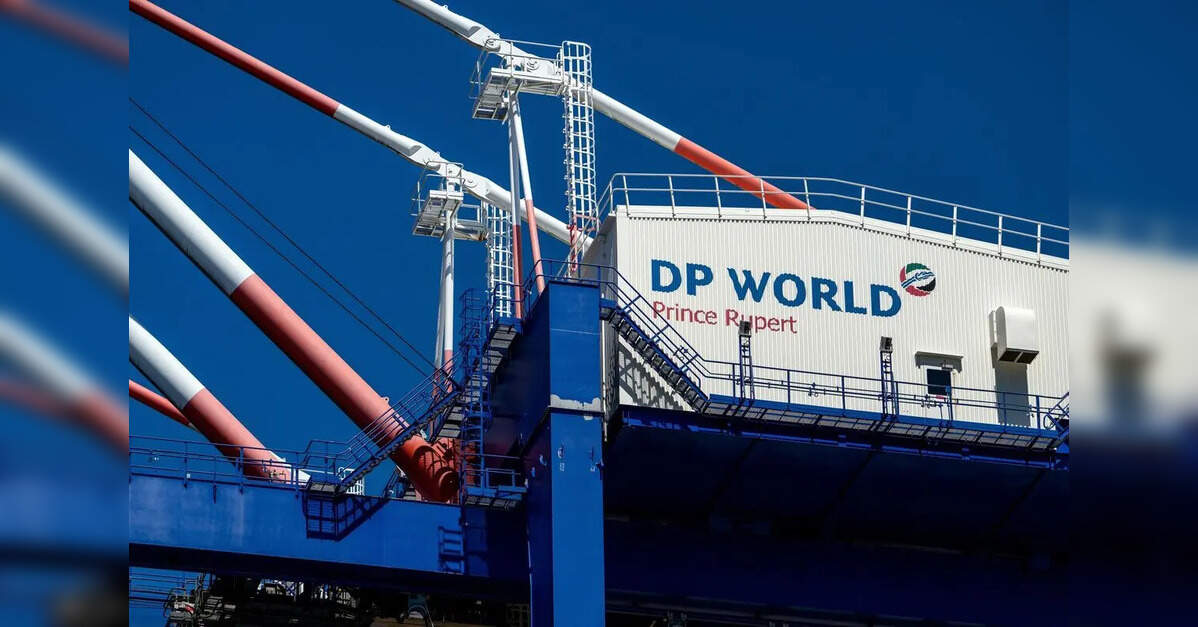
 DP World has built an integrated Indian network spanning ports, rail and inland logistics.Dubai-based logistics giant DP World is prepared to invest $3-5 billion more in India, but faster infrastructure development and quicker project approvals will be critical to unlocking the country’s trade potential, Group Chief Executive Yuvraj Narayan said, as disruptions in West Asia force a costly rethink of global supply chains.
The proposed investment would be deployed as opportunities arise, with the company pursuing port concessions and logistics projects, including the proposed Vadhavan port on the western coast. Narayan said the amount was not tied to a fixed investment timetable and would depend on the outcome of bids.
“We are prepared to invest between $3 billion and $5 billion (in India),” he told a select group of journalists.
“If Vadhavan happens, what do you think Vadhavan is going to cost? In phases, in different phases, it will be $10 billion of investment,” he said, referring to the scale of the proposed port development over 10 to 15 years.
DP World, which has built an integrated Indian network spanning ports, rail and inland logistics, is seeking to expand its footprint as the world’s most populous country looks to strengthen domestic connectivity and become a larger manufacturing and export hub.
The company announced an additional $5 billion India investment commitment in October 2025, over and above $3 billion invested in the country over three decades.
India’s infrastructure push has delivered substantial improvements, Narayan said, but port and rail development and the processes governing project execution need to move faster.
“One always hopes things could happen faster,” he said, pointing to the long wait for the Vadhavan project and arguing that infrastructure development should keep pace with progress in roads, airports and power.
DP World is prepared to bid for new opportunities, expand its rail network and increase port capacity, Narayan said. The company currently operates six port concessions in India and plans to increase its railheads from eight to 12, according to him.
India’s growing economic scale makes it attractive despite historically weaker returns on invested capital, Narayan said. Currency depreciation, driven in part by the country’s energy import bill, has weighed on returns, while infrastructure upgrades, digitisation and the shift towards renewable energy could improve the outlook.
The proposed investment would also help strengthen DP World’s wider supply-chain network, rather than simply expand its Indian business, he said.
The investment push comes as disruptions around key West Asian maritime chokepoints force shipping companies to reroute cargo, add capacity and absorb higher operating costs.
Narayan said DP World’s flagship Jebel Ali port in Dubai, which normally handles about 15 million twenty-foot equivalent units (TEUs) annually, was facing a severe reduction in activity because of restricted access. He said the disruption was affecting cargo flows well beyond the Gulf, creating congestion at ports and logistics facilities across parts of Asia and Africa.
The impact extends beyond the port itself, he said, because Jebel Ali serves as a major transshipment hub linking Asian manufacturing centres with markets in the Middle East, Africa and Europe.
DP World had expected Jebel Ali’s port operations to generate about $1.2 billion in earnings before interest, taxes, depreciation and amortisation (EBITDA), but Narayan said the disruption would materially reduce the group’s earnings outlook. He estimated that global EBITDA could fall to about $5.8 billion from a level of roughly $6.2 billion to $6.4 billion, with growth elsewhere cushioning part of the lost contribution.
The company is exploring alternative routes through other Gulf ports and overland connections, including routes through Saudi Arabia, Narayan said. But building replacement capacity takes time, and he estimated that new port capacity could take two to three years to develop.
“Port capacity is not created overnight,” he said, warning that the full consequences of the disruption may take time to emerge.
The crisis also underscores the growing cost of building redundancy into supply chains. Companies that once prioritised lean inventories, low costs and just-in-time deliveries are increasingly seeking alternative suppliers, routes and production centres to reduce their exposure to geopolitical shocks.
Narayan said global trade now required substantially more shipping capacity to move less cargo than before, as longer routes and operational inefficiencies absorbed available capacity. Higher interest rates, fuel expenses and other operating costs were adding to the burden.
“Who do you think pays for all this disruption? You – as a consumer,” he said, arguing that the additional costs would ultimately be passed through to buyers of goods.
He expects shorter supply chains and a greater emphasis on regional production to reshape trade flows over time, potentially increasing the importance of north-south trade between Asia, Africa and other emerging markets.
For India, the opportunity lies in expanding manufacturing and exports while building the port, rail and inland logistics infrastructure needed to connect producers with global markets.
Narayan said India’s exports and imports currently account for a relatively small share of its overall economy, leaving considerable room for growth. A substantial increase in trade would require a corresponding expansion in logistics capacity, he said.
However, he cautioned that resilience would come at a cost. Maintaining alternative routes, suppliers and inventory buffers would make supply chains more expensive and capital-intensive than the lean systems businesses had previously pursued.
“The world has to come to peace,” Narayan said, arguing that physical infrastructure alone cannot eliminate the risks posed by conflict.
Published On Oct 16, 2026 at 04:31 PM IST
Join the community of 2M+ industry professionals.
Subscribe to Newsletter to get latest insights & analysis in your inbox.
All about ETInfra industry right on your smartphone!
