
A proposal to put privately owned solar panels on dozens of government buildings in Richmond had stalled out before Mayor Danny Avula said he would stop pushing for it so the city could look into a “possible relationship” that might erode public trust in the deal.
The City Council stood by its 5-4 vote on Sept. 28 to reject the deal, rebuffing an effort to put the solar proposal back on the agenda for a meeting on Oct. 5. In an email sent Oct. 2, the Council clerk said a majority of members “have not agreed” to reconsider the solar vote.
That email was sent a few hours before news broke that a part-time staffer in the city’s Office of Sustainability, which was leading the solar energy project, was working with the private solar developer at the same time.
Richmond solar energy proposal fails to pass as Council meeting turns chaotic
“Actions have consequences, and City Council’s action tonight will make it harder to achieve the City’s sustainability goals.”
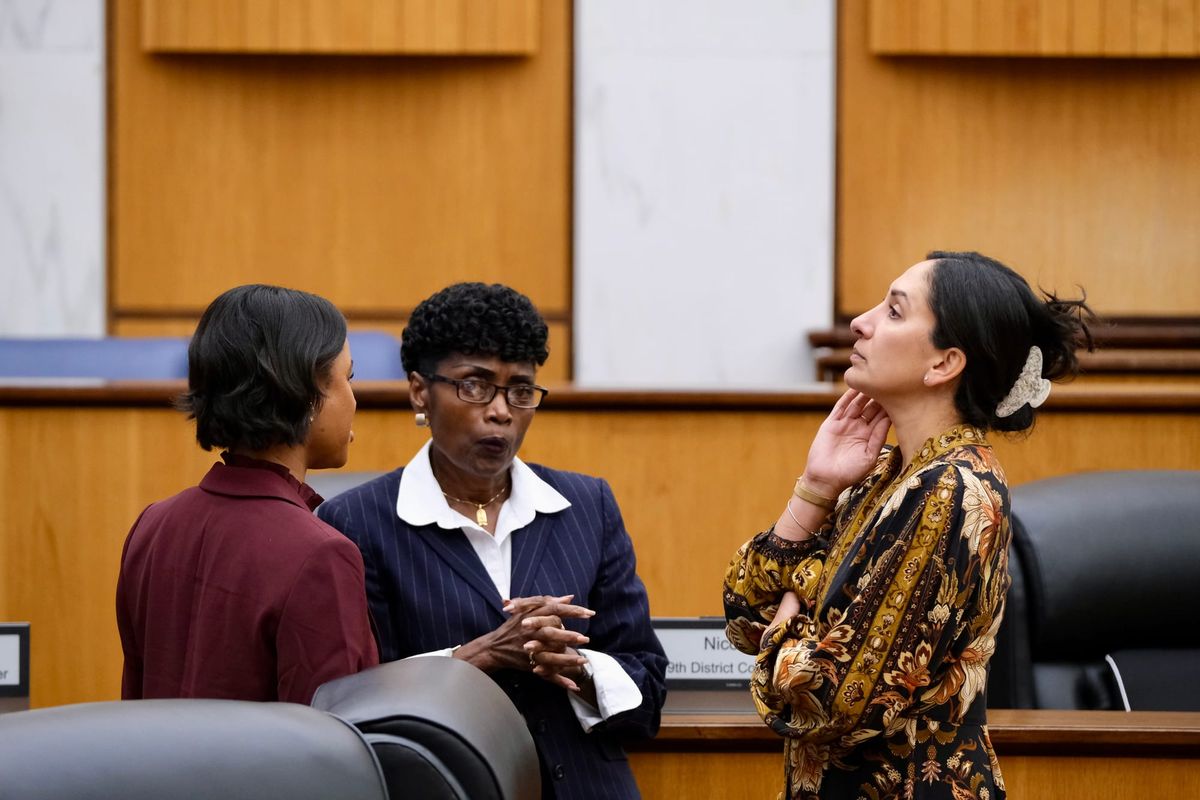
The Council’s decision not to revisit the matter seemed to be the end of the proposed agreement with Staunton-based Secure Solar Futures, because it meant officials wouldn’t be signing off on any rooftop leases by the project deadlines the city had been given. The company would have paid to install and maintain solar panels on city buildings, while selling the energy back to the city at a lower rate than what Dominion Energy charges.
Council members balked at the deal due to concerns it was being forced through on a compressed timeline and over the objections of some administration officials who felt it would come with too much legal and financial risk.
Adding to the difficulties, there’s now an open inspector general investigation related to the project and an internal review of a possible staff conflict of interest.
However, Tony Smith, the CEO of Secure Solar Futures, said he thinks there’s still a chance to work something out after the city completes its investigation.
“There’s definitely an opportunity. But we want to allow the investigation to follow its course,” Smith said in an interview last week. “My hope and expectation is that it would resolve quickly.”
The drama surrounding the proposal — which proponents said could lead to around $20 million in energy savings over 25 years — has also led some city officials to wonder if the company will eventually choose to just walk away.
“We don’t walk away. We walk towards,” Smith said. “We’re fully committed to helping the city realize its goals for sustainability, energy savings and relieving the taxpayer burden.”
As electricity costs rise and federal tax credits wind down, Richmond hopes to move fast on solar
Currently, Richmond’s annual electricity costs are about $18.7 million.

City officials don’t appear to be trying to reintroduce another version of the solar plan. There was no new solar-related legislation introduced at the Council’s Oct. 13 meeting, making it unlikely the matter will be reconsidered anywhere close to the deadlines listed in a previous memo from the Avula administration. As of late last month, the administration said the Council had until Oct. 1 to approve the full solar deal involving 39 rooftops. A smaller-scale project involving 17 rooftops was possible by Oct. 5, that memo said.
Without Council action by that timeline, the administration said, the “project does not move forward.”
“We will, of course, try to regroup, but we don’t have a clear path to rooftop solar in Richmond now that key deadlines have passed,” said Susan Kruse, executive director of Community Climate Collaborative, a nonprofit that was involved in planning the solar project.
Though the city has said it’s doing an internal review, answers haven’t come quickly.
It’s not clear what Inspector General Foster Curtiss is looking into. The IG’s office typically doesn’t comment on active investigations and doesn’t give timelines for how long a particular investigation might take.
The revelation that caused the mayor to put the project on hold dealt with part-time sustainability staffer Andre Eanes, who also had a professional relationship with Secure Solar Futures, according to public LinkedIn info.
Staunton-based Secure Solar Futures isn’t exactly an unknown company with a limited track record. The organization has done several solar power purchase agreements across Virginia like the one Richmond was considering, including a deal with Richmond Public Schools.
In an Oct. 2 email to the Council, the mayor said he didn’t think the issue impacted the solar negotiations. But, Avula added, it “will absolutely color the public perception around this work.” The mayor told the Council “we are going to stop pursuing this effort right now.”
“While I absolutely believe in the importance of this effort, and the integrity of the negotiating process, this uncertainty raises too many concerns, and I believe stepping away from this is necessary to preserve the public’s trust,” Avula wrote.
Eanes has told media outlets the city was aware of the relationship and had signed off on it through the human resources department. Smith has said the same.
“The city was aware that he was doing this work with us and it was cleared by HR,” Smith said, explaining that Eanes had done some technical site analysis work for the company related to the solar project the sustainability office was pursuing.
City officials haven’t commented on the assertion the matter was fully cleared by HR.
The HR department declined to answer emailed questions from The Richmonder. On Oct. 7, a city spokesperson said the Office of Strategic Communications was working to “gather the appropriate details” to be able to answer. More than a week later, there was no response.
Officials also said they would need more time to pull potentially relevant HR records in response to Freedom of Information Act requests, saying the city couldn’t respond within FOIA’s standard five-day window and would need the additional seven workdays the law allows.
According to city HR policies, employees must seek “written approval” for outside employment. A copy of any such approval is supposed to be kept in the employee’s personnel file.
The sustainability office also didn’t answer emailed questions.
The mayor’s office has offered few updates since saying the matter was under review.
“We’re taking the time to find out more about the questions that are being raised,” Avula spokesperson Mira Signer said on Oct. 2. “The Mayor directed the CAO to look into the situation immediately, and we will know more soon.”
There has been no formal determination any rules were broken. Under Richmond’s ethics policy, employees are instructed to avoid anything that could create the appearance of a conflict of interest, even if there’s no intent to do anything overtly improper.
“It is important that all City employees remain independent, impartial and responsible to Richmond citizens,” the city ethics policy states. “No employee of the City of Richmond shall engage in business activity or have any direct or indirect financial interest, professional activity or incur any obligation of any nature which conflicts or would appear to conflict with the fair, impartial and objective performance of officially assigned duties and responsibilities.”
As part of a 2025 review of the city’s purchasing card system, City Auditor Riad Ali identified lax enforcement of conflict of interest policies as an area of concern. That audit was mainly focused on employees who had authority over procurement and purchasing decisions, but included recommendations for strengthening conflict of interest rules more broadly.
The audit suggested requiring annual conflict of interest disclosures from all employees with “with purchasing, approval or vendor selection authority” and a stronger system for reviewing and acting on “disclosed relationships.”
The auditor also recommended a conflict of interest disclosure tracking system and yearly “conflict of interest and ethics training” for employees with authority over how public dollars are spent with private companies.
The purchasing card audit was issued in June of 2025.
In a June 2026 update from the auditor’s office, the suggestions regarding conflicts of interest were listed as “high priority” recommendations that had not yet been resolved.
Contact Reporter Graham Moomaw at gmoomaw@richmonder.org