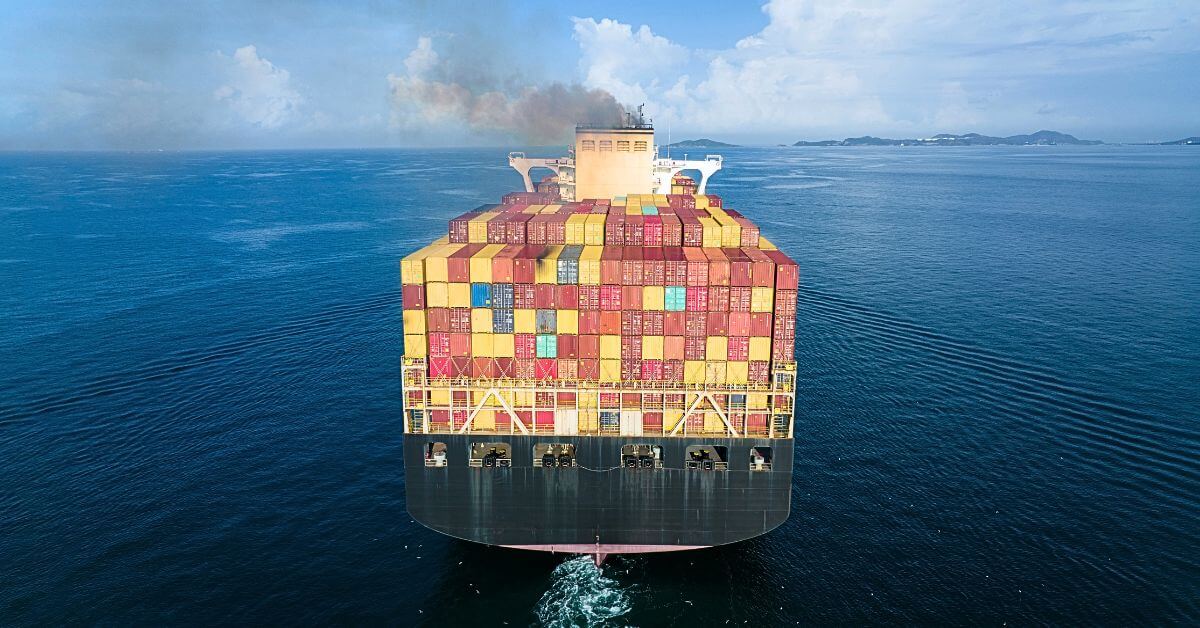
Image for representation purposes only
A Singapore-flagged container ship has sunk in the Strait of Hormuz after being struck by an unidentified projectile and catching fire, while a second Singapore-registered vessel was damaged in a separate attack.
All 21 crew members aboard the GFS Pride were safely evacuated, and no injuries were reported, Singapore’s Maritime and Port Authority (MPA) said on Wednesday. The ship was sailing through the strait on Tuesday, October 13, when it was hit.
Iran’s Revolutionary Guard said the vessel struck a naval mine, but maritime security firm MARISKS said there was no independent evidence to confirm that claim.
Containers were reported floating in the water after the ship sank, according to a navigational warning issued by Pakistani maritime authorities.
More than 20 vessels, mostly oil tankers, have come under attack this month, according to incident reports from the United Kingdom Maritime Trade Operations (UKMTO).
The disruption is also affecting oil shipments. Crude exports through the Strait of Hormuz averaged 8.5 million barrels per day in the week ending October 12, nearly 40% below normal pre-war levels, according to data from analytics firm Kpler.
The GFS Pride, which is managed by UAE-based GFS Ship Management FZE, has a capacity of 2,824 twenty-foot equivalent units (TEU).
Iran’s Revolutionary Guards said the vessel was carrying more than 2,500 containers and had attempted to use what they described as an unauthorised and dangerous route.
The Guards said the ship caught fire and sank after hitting a naval mine. The cause of the sinking has not been independently confirmed.
In a statement, Singapore’s MPA said it was deeply concerned about continued attacks on commercial shipping in the Strait of Hormuz.
The MPA also reported damage to the hull of another Singapore-registered container ship, the GFS Giselle, after it was struck by an unidentified projectile on Wednesday, October 14. The vessel reached a safe anchorage, and none of its crew members was injured.
The UKMTO separately received a report of a container ship being struck by an unknown projectile. It was not immediately clear whether that report referred to either of the Singapore-registered vessels.
In a separate incident, the Antigua and Barbuda-flagged bulk carrier Cape Dao also sank near the Strait of Hormuz, weeks after it was struck by a projectile on September 23, according to data from the International Maritime Organisation (IMO), the United Nations shipping agency.
One crew member was killed, while the remaining crew members were evacuated after the initial strike, maritime sources said. The vessel’s UAE-based manager, Peonies Shipmanagement FZE, could not be immediately reached for comment.
The IMO has recorded multiple commercial vessel sinkings since the US-Iran war began on February 28. The Singapore-flagged container ship Safeen Prestige was struck by a projectile in March and later sank north of the Strait of Hormuz. Iran’s Revolutionary Guards also attacked and seized the container ship MSC Francesca in April.
The attacks this month have left two sailors missing and more than a dozen injured, according to the IMO.
Strait of Hormuz
The Strait of Hormuz is a key route for global energy shipments. Before the war, about one-fifth of global oil and liquefied natural gas trade passed through the waterway.
Between 125 and 140 large commercial vessels, including oil tankers, gas carriers, bunker vessels and container ships, passed through the strait each day before the conflict.
Traffic came to an effective standstill on February 28, when the United States and Israel launched military airstrikes across Iran.
Crude oil exports through Hormuz recovered to pre-war levels in September as the US military guided tankers through the strait. Shipments have since fallen as attacks increased.
Kpler data showed that crude flows through the strait varied sharply from day to day. About 3 million barrels passed through on Monday, compared with 6 million barrels on Friday.
Total shipments from the Middle East, including oil transported through pipelines to the Gulf of Oman and the Red Sea, stood at 14 million barrels per day. That was nearly 20% below pre-war levels, the data showed.
References: CNBC, TOI
Disclaimer :
The information on this website is for general purposes only. While efforts are made to ensure accuracy, we make no warranties of any kind regarding completeness, reliability, or suitability. Any reliance you place on such information is at your own risk. We are not liable for any loss or damage arising from the use of this website.

About Author
Aakriti is a journalist and news writer at Marine Insight, with over three years of experience covering the global shipping and maritime …Read More ->
Disclaimer :
The information on this website is for general purposes only. While efforts are made to ensure accuracy, we make no warranties of any kind regarding completeness, reliability, or suitability. Any reliance you place on such information is at your own risk. We are not liable for any loss or damage arising from the use of this website.