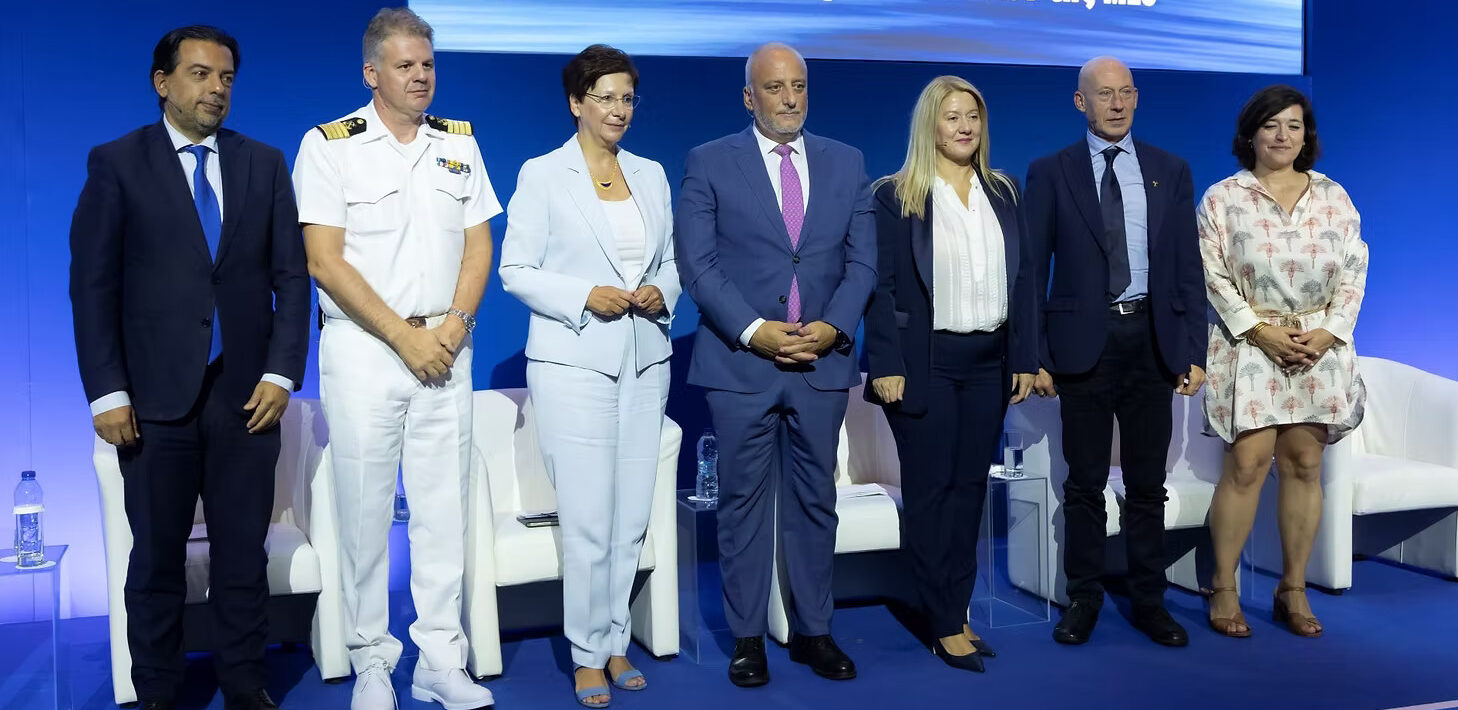
Trade unions have called for stronger enforcement of the Maritime Labour Convention (MLC), action on excessive working hours and improved seafarer welfare, as maritime stakeholders gathered in Athens on September 18 to mark 20 years since its adoption.
The symposium, organized by the Panhellenic Seamen’s Federation (PNO) and the Federation of Transport, Petroleum and Agriculture Workers (OMEPEGE/FTPAW-SEK), brought together trade unions, governments, international institutions and shipowners to assess the Convention’s achievements and identify areas requiring further action.
Adopted in 2006, the MLC is widely regarded as the fourth pillar of international maritime regulation, alongside SOLAS, MARPOL and STCW. It establishes international minimum standards for seafarers’ working and living conditions, wages, repatriation, medical care and other fundamental rights.
However, the European Transport Workers’ Federation (ETF) warned that inconsistent implementation and enforcement by flag and port States continue to undermine seafarer protections and fair competition.
Excessive working hours raise safety concerns
Working time and fatigue emerged as key priorities for further reform. According to research examined in a World Maritime University study commissioned by ETF and the International Transport Workers’ Federation (ITF), seafarers work an average of almost 75 hours per week, while international maritime rules can permit working hours of up to 91 hours over seven days.
ETF General Secretary Livia Spera warned that such arrangements highlight the gap between protections for maritime workers and those available to shore-based employees.
Excessive working hours are not only a labor rights concern but also a maritime safety issue, as fatigue can impair concentration, judgment and reaction times.
PNO Secretary General Capt. Emmanuel Tsikalakis also highlighted working time, fatigue and mental health, linking these unresolved challenges to the difficulties of attracting and retaining young people in the maritime profession.
ETF has called for excessive working hours to be addressed as part of the next phase of the MLC, alongside stronger enforcement mechanisms and improved protection of seafarers’ rights.
Stronger enforcement needed
OMEPEGE/FTPAW-SEK Secretary General Charalambos Avgoustis called for more effective implementation of the Convention to ensure that the rights it establishes are respected in practice.
ETF has also urged the European Maritime Safety Agency (EMSA) to strengthen its contribution to enforcement, including through more robust and standardized training for Port State Control inspectors and greater attention to compliance with MLC requirements.
Effective inspections are essential to identifying violations involving working and rest hours, unpaid wages and other breaches of seafarers’ rights, the federation said.
ITF General Secretary Stephen Cotton stressed the importance of the tripartite partnership between workers, governments and employers that underpins the Convention. He called for continued cooperation to address emerging challenges across the maritime sector.
The ITF’s Flag of Convenience campaign, collective agreements and global network of inspectors have also helped recover unpaid wages and support abandoned seafarers, complementing the protections established by the MLC.
ETF calls for socially sustainable shipping in Europe
The discussions also addressed the relationship between seafarer welfare and Europe’s maritime competitiveness.
ETF argued that European shipping should compete through skilled workers, quality jobs and strong social standards rather than lower labor costs or weaker working conditions.
The federation is calling for a European Maritime Space for Socially Sustainable Shipping, under which companies benefiting from access to the EU Single Market and European public support would also be expected to respect relevant social standards.
ETF also stressed that changing a vessel’s flag should not result in a lower level of protection for its crew.
Participants in the Athens symposium included ITF General Secretary Stephen Cotton, International Labour Organization representative Beatriz Vacotto, Greek Shipping Minister Vassilis Kikilias and Cyprus Deputy Shipping Minister Marina Hadjimanolis, alongside trade union and shipowner representatives from Greece, Cyprus and the wider international maritime community.
As the MLC enters its third decade, the discussions highlighted the need to build on its achievements through stronger enforcement, improved working conditions and more effective protection of seafarers’ rights.