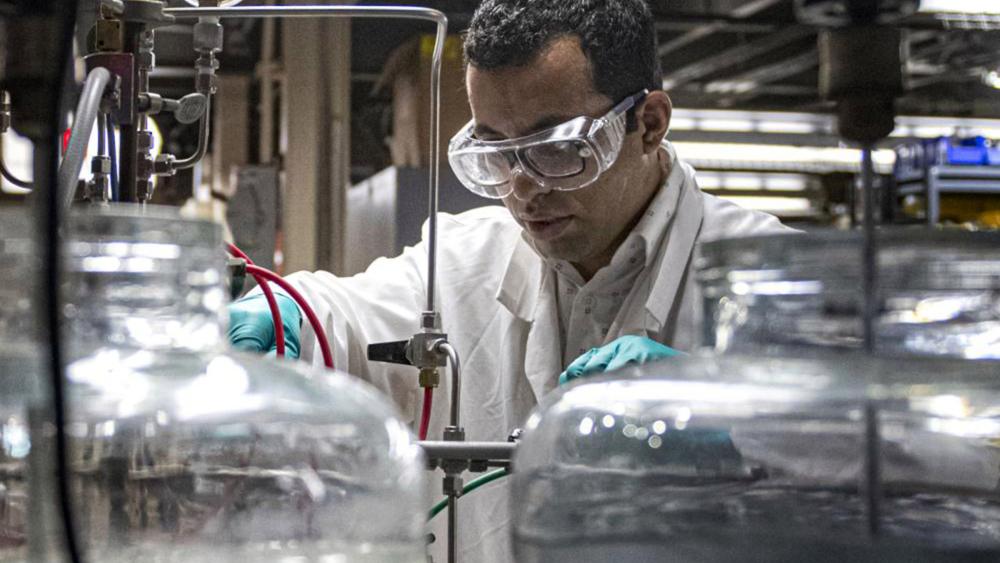
During Stage 1, the team is focusing on prototype development, product characterization, process validation and industry engagement. The work will help determine how the platform can be integrated into existing recycling facilities and how recovered materials can meet the specifications of downstream users, all within the U.S. The project is intended to help demonstrate that a domestic circular supply chain for critical materials can be technically feasible, commercially relevant and ready for scale-up.
“The Tech Metal Transformation Challenge is an exciting program that addresses a national security imperative to secure the domestic supply chain for critical minerals through research and innovation,” said Erwin Gianchandani, NSF assistant director for the Directorate for Technology, Innovation and Partnerships (NSF TIP), which administers the award program, in a press release announcing the winners. “The winners of this challenge demonstrated their capability to create solutions that tackle the hardest technical gaps in critical materials recovery, gaps that directly impact U.S. manufacturing competitiveness and national security. Their work will reduce reliance on foreign sources and enable on-shoring of advanced manufacturing capabilities across key sectors like defense and energy.”
Industry partners IBM and Aurubis are supporting the initial stage of the project by providing real-world material streams and reference material, enabling the team to evaluate its platform under practical conditions. The work will also involve collaboration with the U.S. Naval Research Laboratory, reflecting that the recovery of critical materials from domestic end-of-life electronics has potential national security implications, Rezaee said. Many of these materials are currently sourced through fragile or foreign supply chains, so developing domestic secondary sources could strengthen the nation’s ability to advance high-tech research and manufacturing, he added.
While the technology has clear real-world applications today, the basis of the work started as fundamental science. The scientific foundation behind several elements of the company’s recovery approach traces to federally funded basic research at Penn State, supported by the U.S. Department of Energy’s REMADE Institute, Rezaee said. Intel-E-Waste later used support from the DOE E-SCRAP Prize to begin scale-up planning and industry validation, helping shape the company’s pathway toward a deployable commercial platform.
At Penn State, Rezaee is collaborating with co-principal investigators Sarma Pisupati, director of the Center for Critical Minerals at Penn State; Barbara J. Arnold, chair of the mining engineering program at Penn State; and Olumide Ogunmodimu, assistant professor of energy and mineral engineering. The team brings expertise in critical minerals, mineral processing, separation science, process design and scale-up to support Intel-E-Waste’s technology validation and deployment pathway.
The project highlights the University’s role in translating foundational research into practical technologies that address national needs, Rezaee said. It also shows how federal research funding, NSF I-Corps, university innovation programs, startup formation and industry partnerships can work together to move discoveries from the laboratory toward deployment.
The team went through the regional and national NSF I-Corps programs to test the feasibility of the business and commercialization pathway, talking to recyclers, manufacturers, policymakers, smelters, and downstream users. The I-Corps program helped pave the way for the formation of Intel-E-Waste and its commercialization strategy.
The team also received support from Penn State’s Entrepreneur-in-Residence program, which connects startup teams with experienced entrepreneurs and executives who provide hands-on guidance as they navigate commercialization. The University’s Startup Leadership Network Board of Advisors Program, an industry-specific advisory board made up of experienced executives and entrepreneurs, also worked with the team to review progress, work through strategic and operational challenges, and provide guidance on areas such as market entry, funding, organizational development and growth.
“At the end of the day, this technology has to work for the recycling industry and for the manufacturers who need these materials,” Rezaee said. “That is what makes this project exciting. We are not just developing a process; we are building a pathway from discarded electronics and solar panels to domestic manufacturing.”
At Penn State, researchers are solving real problems that impact the health, safety and quality of life of people across the commonwealth, the nation and around the world.
For decades, federal support for research has fueled innovation that makes our country safer, our industries more competitive and our economy stronger. Recent federal funding cuts threaten this progress.
Learn more about the implications of federal funding cuts to our future at Research or Regress.