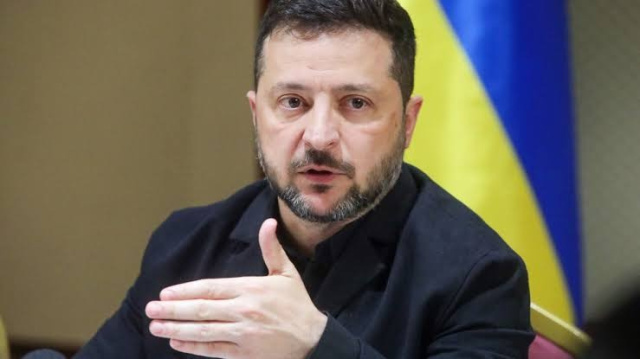
Ukrainian President Volodymyr Zelensky said at the Warsaw Security Forum on Oct. 12 that Kyiv was ready to sign guarantees against attacks on energy infrastructure, but Russia must also demonstrate its willingness to observe an energy ceasefire, European Pravda reported.
Zelensky said Ukraine was waiting for details of the discussions between the United States and Russia and believed the proposed truce could help bring the war to an end if Washington ensured Moscow respected it.
“We are waiting to see what specific steps the Americans are ready to take. This energy ceasefire can work. And it can become a major step towards ending the war if the Americans truly step now and make sure Russia respects the energy ceasefire,” Zelensky said.
He added that Kyiv supported the initiative and was prepared to sign guarantees against strikes if Washington required them, while insisting that Russia must also show it accepted the arrangement.
“We are grateful to America and support the idea of an energy ceasefire. And now Russia must also show that it agrees to this energy ceasefire. And if the Americans need it, we are ready to sign these guarantees to make sure they can be trusted. And it’s important that we all see this situation in the same way,” Zelensky said.
The Ukrainian president also said no European country opposed peace or wanted war, adding that no one in Europe wished harm to the United States, apart from Russia.
Zelensky stressed that halting Russian attacks on power stations and Ukraine’s energy grid was central to any ceasefire and said the American team had been fully briefed on Kyiv’s position.
On Oct. 11, U.S. President Donald Trump said on his Truth Social platform that Ukraine and Russia had agreed to an immediate energy ceasefire. However, Axios journalist Barak Ravid reported that Zelensky had not known about the arrangement announced by Trump, although he was willing to accept it.
A White House official told Axios that the U.S. president’s understanding of an energy ceasefire was limited to Russia and Ukraine stopping attacks on each other’s oil refineries.
Zelensky also argued that Washington should have reached a diesel supply agreement with Ukraine rather than Russia, saying Kyiv has influence over the operation of Russian oil refineries and the movement of vessels carrying Russian oil.
He questioned whether the diesel arrangement between Trump and Russian President Vladimir Putin would significantly affect the global market, saying the agreed quantities were too small to make a substantial difference.
“If someone thinks otherwise, let them think so. I believe that other motives lie behind this decision. If so, then why isn’t America concluding an agreement on diesel fuel supply with Ukraine?.. We influence whether these vessels move. We determine whether the oil refineries operate. Let’s do that,” Zelensky said.
The Ukrainian president reiterated that protecting the country’s electricity supply was Kyiv’s priority and offered to refrain from targeting Russian diesel infrastructure if Russia guaranteed the safety of Ukraine’s power grid.
“If they can guarantee the protection of our power grid, we will not interfere with their diesel infrastructure. For us, power supply primarily means helping people. Power supply is important for people, but this [stopping Russian strikes on Ukraine’s energy infrastructure – ed.] is also helpful for Europe, as everyone knows that we are connected to the European grid, and if our energy sector is not targeted by attacks, we will be able to help other countries,” Zelensky said.
He said Ukraine had only one oil refinery and did not have large oil reserves, substantial oil export capacity or dozens of refineries. The country imports large quantities of diesel and other petroleum products, he added.
Zelensky referred to Russian attacks on Ukrainian power generation facilities following Trump’s social media announcement of the proposed ceasefire, saying the strikes showed that Moscow was not observing the initiative.
“It was clear that Putin does not read Truth Social, and his Shahed drones follow a different set of instructions. But this post is actually about something that affects the lives of millions of people, and that makes it very, very important,” Zelensky said.
He warned that Ukraine would respond if Russia refused to agree to an energy ceasefire during the winter. He said Moscow had been attacking Ukrainian power plants and the electricity grid for several years and sought to intensify the campaign each winter, including the current one.
“We have power cuts every single day. For Russia, of course, the petrol shortages and burning oil refineries because of our strikes and response are painful. And these are not the same volumes that could be lost because of the crisis in Hormuz. But if Russia wants us to stop our long-range strikes against its oil refineries and oil exports, then Russia must stop its strikes against our energy system and critical infrastructure and stop killing our people. This is only fair,” Zelensky said.
At the Warsaw Security Forum, Zelensky also warned that Russia was preparing numerous aggressive hybrid operations targeting European countries and urged governments not to underestimate the threats.
“Do not underestimate the threats to your own countries. There is no such thing as a ‘small act of destabilisation’. Our intelligence services know that Russia is planning many, many aggressive hybrid operations against Europe, against different countries, against your countries,” Zelensky said.
He did not identify the countries potentially targeted but called on European states to remain united domestically and pay attention to incidents that could develop into security problems.
“Pay attention to every situation that could become a problem, and stay united in your defence. Unity at home is always important when facing threats from outside,” Zelensky said.
Polish Foreign Minister Radosław Sikorski has highlighted the growing scale of Russian hybrid activity against European countries and said NATO must be prepared for possible casualties. The Federation of German Industries has warned of an increasing risk of Russian sabotage targeting German companies, while German Chancellor Friedrich Merz has said Germany is preparing for large-scale hybrid attacks, including particularly serious ones, and would respond quickly and clearly.