
 High-quality agricultural producers in Xuan Truong ward, Da Lat, are exchanging information and learning about each other’s products. Advantages that help Lam Dong’s agricultural products gain a “passport” to the market.
The concept of a “passport to the global value chain” for Lam Dong’s agricultural products (such as coffee, vegetables, fruits, flowers, silk, tea, etc.) is based on ESG practices linked to digital governance/green transformation (digitalization). In this context, sustainable ESG practices represent a new, stricter set of rules that businesses must adhere to if they want to enter large and potentially lucrative international markets such as the EU, the US, Japan, and South Korea . In these countries, trade contracts no longer simply assess agricultural products based on price, quality, or delivery schedule, but also include new “green technical barriers” (EUDR, CBAM, net zero emission standards).
Lam Dong, with its position as the “capital” of high-tech agriculture in Vietnam, boasts key agricultural products such as coffee, pepper, macadamia nuts, vegetables, fruits, fresh flowers, dragon fruit, durian, tea/medicinal herbs, etc., which have established a foothold in both the domestic market and key export markets (EU, US, Japan , South Korea, China…) thanks to its existing advantages in production scale and specialized high-tech agricultural zones (Da Lat, Lac Duong, Duc Trong, Lam Ha, Di Linh, Dak Mil, Dak Song, Krong No, Ham Thuan, Bac Binh, Tanh Linh, Ham Tan…). Recognized trademarks, geographical indications, and brand certifications contribute to affirming the quality of agricultural products, such as: Cau Dat Arabica coffee, Lam Dong coffee, Da Lat vegetables, Da Lat flowers, B’Lao tea, Chu Ru rice wine, Da Lat persimmons, Da Lat strawberries, Lac Duong Laba bananas, Dak Nong coffee, Krong No rice, Binh Thuan dragon fruit…
 Business owners confidently promote their products by sharing stories about the production, processing, and usage of the products.
Agricultural production facilities in Lam Dong have proactively shifted to circular and organic farming models, reducing the use of chemical fertilizers… in order to comply with green technical regulations and carbon credits, meeting international certification standards such as GlobalGAP, Rainforest Alliance, Fairtrade, UTZ… To date, Lam Dong has approximately 500 products recognized as OCOP products with 3-5 stars. In particular, the certification mark “Da Lat – A miraculous essence from fertile land” has been registered for protection, creating strong brand recognition for four groups of agricultural products (vegetables, flowers, Arabica coffee, and agro-tourism), initially attracting large corporations and supermarket chains domestically, as well as international partners (Japan, Korea, Singapore , EU) to place direct production orders.
Challenges hindering Lam Dong’s agricultural products from entering the international market.
According to the latest statistics, Lam Dong province has a total coffee growing area of over 330,000 hectares, with a production exceeding 1 million tons; vegetables and fruits cover more than 75,000 hectares with a production of over 2.8 million tons/year; fresh flowers are grown on more than 10,000 hectares, supplying over 3.8 billion stems/year; over 11,000 hectares of tea, more than 45,000 hectares of durian, and 25,820 hectares of dragon fruit… Of these, the area of high-tech agriculture is the largest in the country (over 110,000 hectares, with about 1,400 hectares applying smart agriculture).
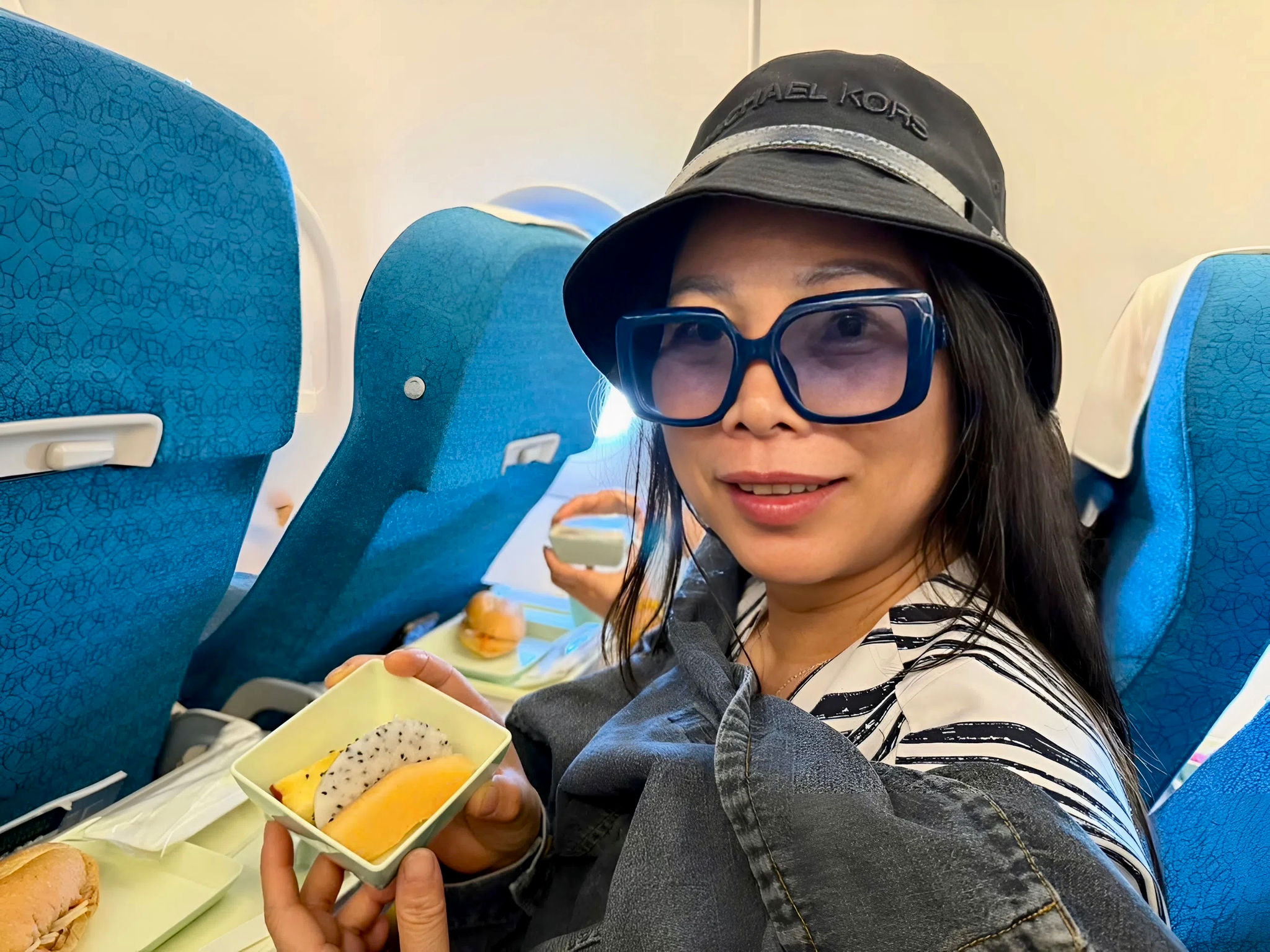 Cantaloupe and dragon fruit from Lam Dong province meet the standards for meals served on Vietnam Airlines flights.
However, the level of compliance with VietGAP, GlobalGAP, Rainforest Alliance standards, etc., is a bottleneck in the local agricultural value chain, leading to a high proportion of raw exports and a low proportion of deep processing. This results in a lack of true mastery, branding, or a strong presence at the final point of sale in international markets. The cold chain and agricultural logistics also hinder trade and goods circulation. The linkages between businesses, cooperatives, and farmers remain weak, fragmented, and disjointed…
Furthermore, the high cost of transitioning to an ESG model and the lack of tools for measuring carbon emissions create green barriers, yet these are key factors in ensuring the “passport” for Lam Dong’s agricultural products. The Lam Dong Department of Agriculture and Environment is developing technological and digital transformation solutions for a shared database for Lam Dong’s agriculture (digital agricultural map, management of planting area codes). This includes building and applying IoT (smart agriculture), AI (artificial intelligence), and Blockchain technology to digitize the traceability process from farm to table.
More importantly, the “Growing Area Code Data”—the mandatory “passport” for official export in Lam Dong—is currently not synchronized, leading to a risk of data transparency and disruption of the supply chain. Therefore, directives from the Lam Dong Provincial People’s Committee promoting exports and supporting agricultural businesses clearly state that the growing area code or packaging facility code is not simply an administrative procedure or a management number; it is a “passport” that enhances credibility, enabling Lam Dong agricultural products to legitimately enter the most demanding markets in the world.