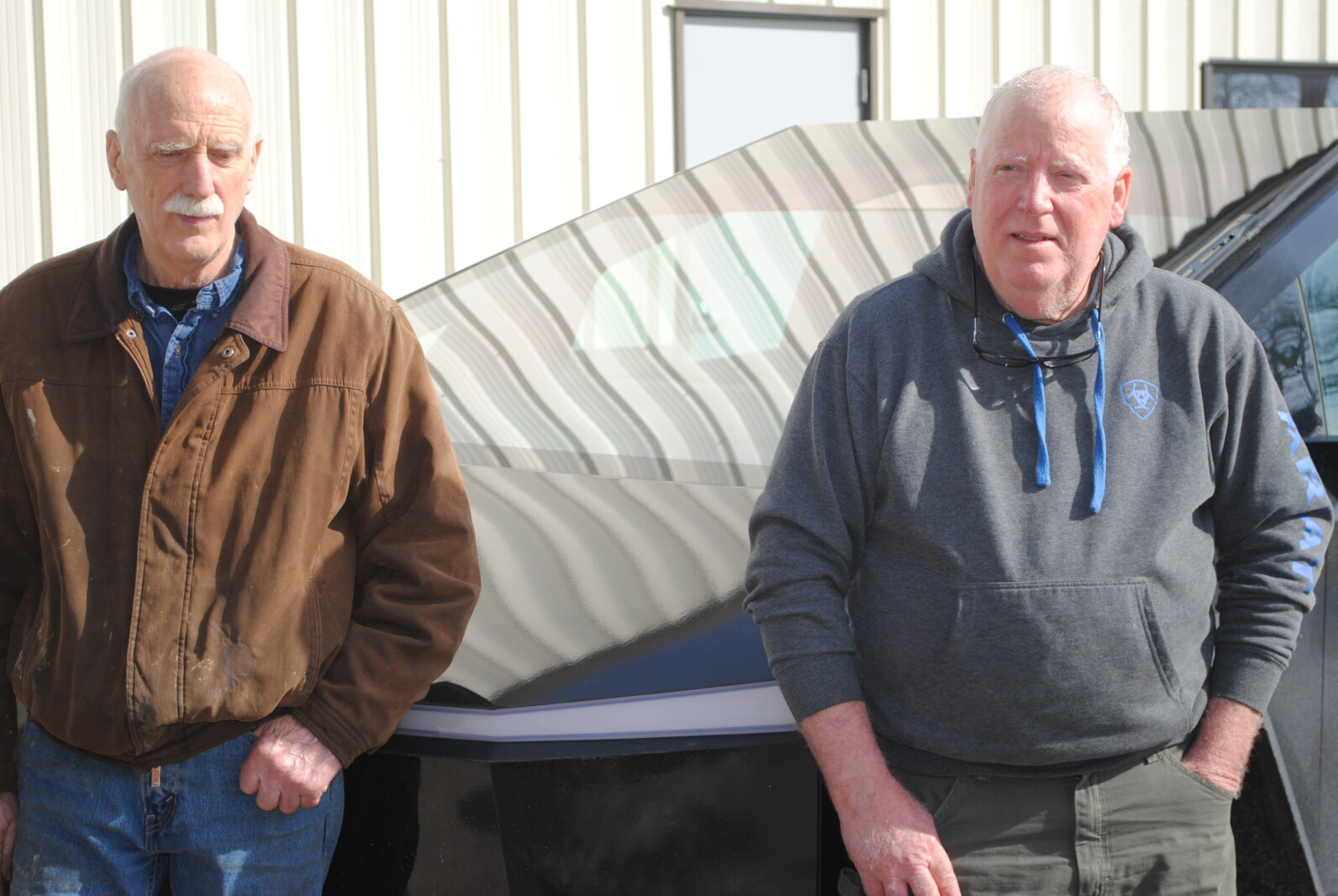
— Despite setbacks, brothers Larry Rauenhorst and Rolly Rauenhorst are continuing to pursue their claim against Renville-Sibley Cooperative Power Association in a dispute over the state’s net metering law.
Larry Rauenhorst filed a civil lawsuit asking the court to order the power cooperative to compensate them at the average retail rate for the electricity produced by a 37-kilowatt capacity
they installed on farmland he owns south of Olivia.
The brothers installed 10 towers, each 12 feet tall, at dispersed locations in a cornfield. They hold a total of 80 solar panels.
Larry Rauenhorst also filed a petition with the Minnesota Public Utilities Commission asking it to reconsider the case brought to it on Aug. 25. He asked the PUC to order the cooperative to pay the retail rate under the net metering law.
The commission voted not to consider the case, deciding it involved a rate dispute and not the practices of the cooperative. The commission said it does not have authority over the rates set by cooperatives.
The dismissal was one of two setbacks for the brothers. The second was a mediation session with the cooperative that failed to reach an agreement, according to Rolly Rauenhorst.
The brothers are working with the University of Minnesota to demonstrate whether agrivoltaics — co-locating agriculture production with solar energy generation — can be economically feasible. The electricity produced on the cropland would be used to power an on-site charging station for an electric tractor and equipment used in farming the land.
Power not used by the farming operation would be provided to the grid through the Renville-Sibley Cooperative Power Association system at the location.
The brothers argue that the state’s net metering law requires the cooperative to compensate them at the average retail rate for electricity. The state’s net metering law requires utilities to pay the retail rate for qualified power facilities of under 40 kilowatts, according to the Rauenhorsts.
The cooperative argues that it is not obligated to pay the retail rate because it does not believe the system installed in a farm field meets the spirit of the net metering law. It does not serve a house, farm or business and does not offset power that would otherwise be purchased by the brothers.
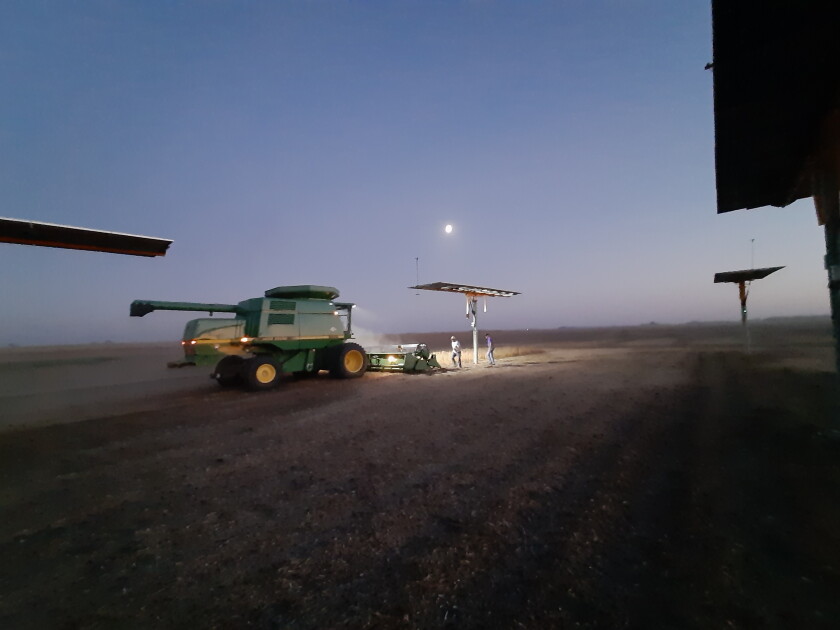
The solar panels on Larry Rauenhorst’s farm field are installed on 12-foot-tall posts to allow crops to grow and to allow farm machinery to operate below them. He and his brother Rolly Rauenhorst are in a dispute with the Renville-Sibley Cooperative Power Association over compensation for the solar energy generated.
Contributed / Larry Rauenhorst
The small cooperative, with 1,564 members, also argues that paying the retail rate represents a significant cost burden to its members.
The cooperative has offered to compensate the Rauenhorsts at the average avoided cost for the electricity, which is significantly less than the retail rate.
Of the decision to pursue the rulings: “It’s too important not to,” Rolly Rauenhorst said.
According to him, the economics of the system do not work if the cooperative pays only the average avoided cost for electricity provided to the grid.
He said the system they installed is not currently connected to the cooperative’s network and is not producing electricity. The lawsuit asks for $9,000 in compensation for the electricity the system would have produced during 2025.

Tom Cherveny is a regional and outdoors reporter for the West Central Tribune.
He has been a reporter with the West Central Tribune since 1993.
Cherveny can be reached via email at tcherveny@wctrib.com or by phone at 320-214-4335.