Leveraging investment to attract capital flows.
Furthermore, Mr. Nguyen Anh Duong, Head of the Department of Comprehensive Research and International Integration, Institute for Policy and Strategy Research (Central Policy and Strategy Board), noted that free trade agreements, along with the “China +1,” ” Thailand +1,” and “Vietnam +1” trends, are creating more opportunities for Vietnam to attract new capital flows and orders; new requirements for sustainable development, green transformation, and the digital economy are becoming part of its competitiveness. For Vietnam, the opportunity lies not only in attracting more FDI projects, but also in the ability to form a production ecosystem linked with domestic businesses.
However, the reality is that the value created by domestic businesses in the global supply chain is still disproportionate; Vietnamese businesses’ exports are still largely concentrated in sectors with low added value; and electronic products and components are largely produced by FDI companies. Dr. Do Dieu Huong, Deputy Director of the Center for Strategy and Policy, Vietnam Institute of Economics and the World, stated that the percentage of domestic businesses linked to global value chains decreased from approximately 35% in 2009 to 18% in 2023. Meanwhile, requirements for suppliers are expanding, from price, quality, and delivery to data, traceability, carbon emissions, environment, labor, and risk management. Therefore, the current challenge is not just to increase export scale, but to elevate the position of domestic businesses in the supply chain. In this context, tax policy needs to be designed as a lever to encourage investment in technology, research and development (R&D), supporting industries, and supply chain capabilities.
Ms. Le Thi Duy Hai, Vice President and General Secretary of the Vietnam Tax Consulting Association (VTCA), assessed that in recent years, the tax policies issued have effectively supported production and business activities, attracted investment, and promoted technological innovation. Notably, the Corporate Income Tax Law (2025) includes preferential policies for science and technology , supporting industries, high technology, semiconductor chips, AI data centers, digital products, and clean energy. Decree No. 320/2025/ND-CP and Circular No. 20/2026/TT-BTC also provide mechanisms allowing eligible R&D costs to be included as deductible expenses, up to a maximum of 200% of actual costs. The VAT deduction and refund mechanism continues to create resources for export businesses.
However, according to the Vice President of VTCA, preferential policies, tax exemptions, reductions, and refunds also have some limitations. Preferential treatment based on geographical location may lead to businesses relocating to benefit from incentives, but without a significant increase in production capacity. Preferential treatment based on capital size means that large-capital businesses do not necessarily possess high-tech capabilities. Tax incentives that are too long can easily create “businesses that live off incentives,” losing their advantages once the incentives end. Incentives not linked to results may lead to the state reducing taxes without guaranteeing that businesses will increase R&D, productivity, exports, or localization.
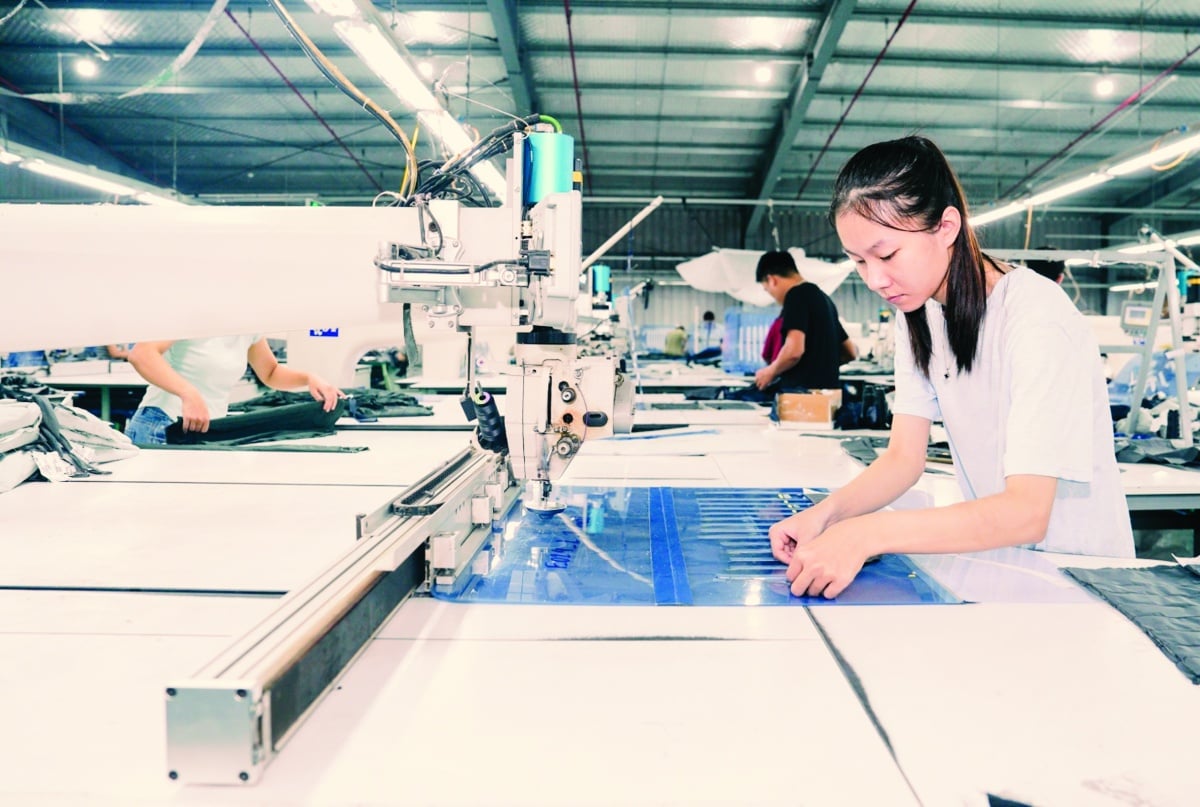 When Vietnamese businesses reach sufficient scale, technological capability, and financial resources, they will be able to fulfill large orders from multinational corporations.
Linked to measurable results.
Given the reality that global supply chains are undergoing significant adjustments towards diversification of production locations, reduced dependence on a single market, increased resilience, and shorter supply chains, Vietnam has the opportunity to attract more projects, orders, and production stages shifting to Southeast Asia. Ms. Le Thi Duy Hai proposed the need to develop a policy package on “Vietnamese businesses participating in supply chains,” in which tax incentives are linked to measurable results such as the percentage of revenue supplied to multinational corporations, localization rate, international quality standards, R&D investment, and technological transformation. This approach would shift the focus from incentives based on investment scale or location to incentives based on capacity and results. Businesses seeking incentives would need to demonstrate improvements in technology, production capacity, quality, or the ability to supply the international market.
For businesses receiving new orders as supply chains shift to Vietnam, policies could also consider supporting investment in machinery, accelerated depreciation, and tax incentives on additional income for a specified period. Conditions for enjoying these incentives should be linked to new orders, increased capacity, skilled labor, export revenue, or revenue from supplying FDI enterprises. Furthermore, reforming VAT refunds based on compliance and risk management will help export businesses shorten their capital turnover time. Exemptions and reductions in import taxes on machinery, equipment, and raw materials not yet produced domestically, serving high technology, automation, semiconductors, green manufacturing, and export goods, should also be considered with conditions.
According to economic experts, tax policies will be more effective if they are placed within a synchronized ecosystem encompassing technology, human resource training, logistics, digital transformation , and sustainable development. Incentives need to have clear timeframes and criteria, and be linked to output results, thereby both supporting businesses in reducing investment costs and creating incentives to improve capabilities. In this way, the shift in global supply chains will not only bring more orders or investment projects to Vietnam, but could also become an opportunity for domestic businesses to move from processing and assembly to higher value-added links in the global value chain.
In particular, amidst the strong restructuring of global supply chains, it is crucial not only to support participation in these chains but also to gradually elevate one’s position within the global value chain. To bridge the capacity gap, Ms. Vuong Thi Oanh, from the Import-Export Department ( Ministry of Industry and Trade ), suggested that businesses need to quickly standardize their processes according to international standards, considering digital transformation and green transformation as vital investments rather than short-term costs. Businesses should promptly develop an ESG roadmap, invest in technology and automation, and strengthen linkages instead of operating in isolation and fragmentation.
“Only when business alliances of sufficient scale, technological capacity, and financial resources are formed can Vietnamese businesses meet large orders from multinational corporations,” Ms. Oanh emphasized.