
Aurora-chasers and Northern Lights enthusiasts could be in for a treat tonight, 8 October 2026, into 9 October and the coming weekend.
That’s because space weather prediction centres in North America and the United Kingdom are tracking an expected increase in solar activity.
The increase is driven by the eruption of a coronal mass ejection from the Sun on Tuesday 6 October at 06:10 UTC.
Authorities including the NOAA’s Space Weather Prediction Center and the UK Met Office are reporting an elevated window for geomagnetic storms.
 Northern lights captured by Raghuvamsh Chavali on 9-10 October 2024 from Ontario, Canada.
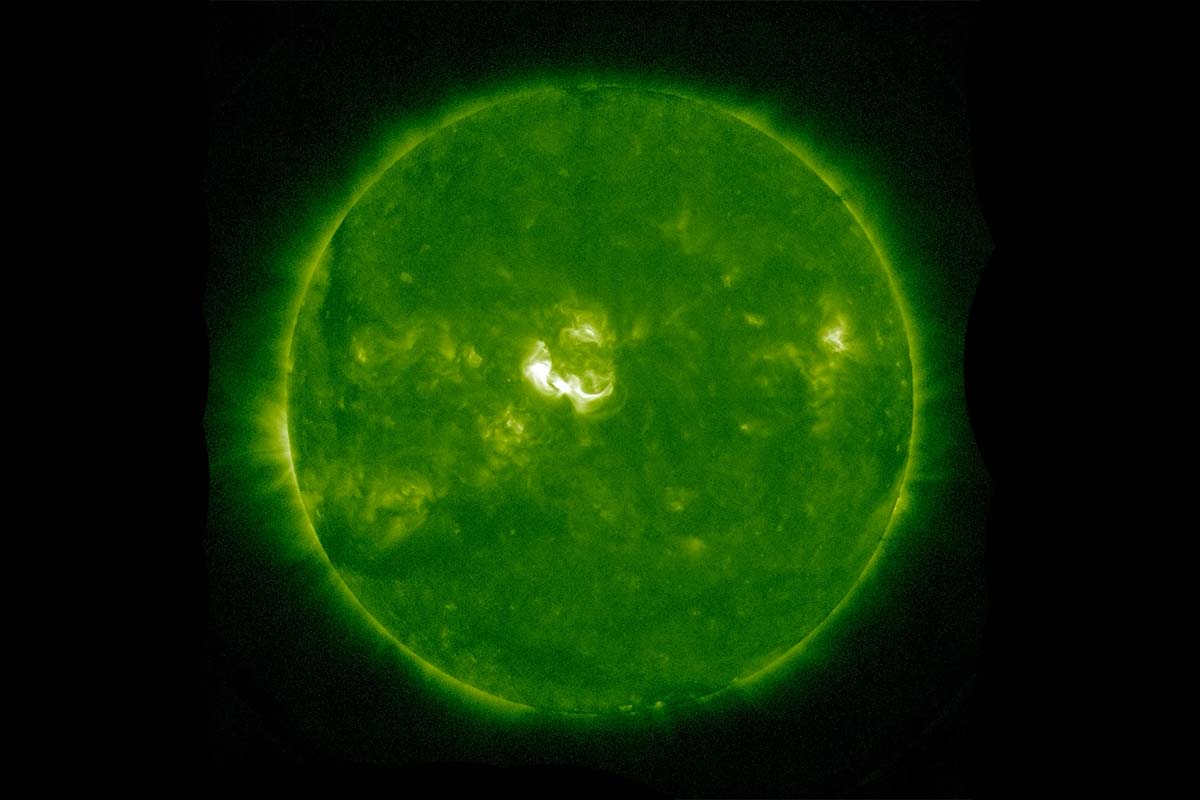 Solar activity was spotted on the centre of the solar disk on 6 October 2026 by NASA’s Solar Dynamics Observatory. Credit: NASA/SDO
The Space Weather Prediction Center has reported a G2-class geomagnetic storm which, while only a moderate storm, is still strong enough to interfere with power and communication systems on Earth. It could also lead to an increase in auroral activity.
The Met Office says there’s a possibility of the “arrival of a glancing blow from another coronal mass ejection” on Saturday 10 October.
That means we could be about to see an increase in aurora displays tonight and into the weekend.
What’s more, the Moon will be below the horizon during peak aurora-watching hours this weekend, which will make the skies darker and increase chances of seeing a display.
How the Sun causes aurora
The aurora, or the Northern Lights, is the visible effect of how our active Sun interacts with Earth’s magnetic field.
The Sun bombards the planets of the Solar System with a stream of charged particles known as the solar wind – including Earth.
But the Sun isn’t always highly active. It goes through 11-year cycles of peaks and troughs of activity known as the solar cycle.
We’re currently past the peak of a solar cycle, which is why we’ve seen an increase in frequency and strength of aurora displays in recent years.
 The 11-year pattern of the solar cycle. Credit: David Hathaway, NASA, Marshall Space Flight Center
During the peak of a solar cycle, there’s an increased chance of events like coronal mass ejections and coronal holes, generating solar storms.
Earth is protected from the Sun by its magnetosphere, which acts like an invisible magnetic shield.
But when a solar storm does hit Earth, our planet’s magnetic field lines funnel solar particles toward the North and South Poles, generating the beautiful displays of colour that we call the ‘aurora’.
That’s why aurorae are normally seen in high-latitude regions like Alaska or Scandinavia.
 Aurora over Howick Sands beach, Northumberland, UK, 20 January 2026, captured by Tom Wright
Where will Northern Lights be visible?
Multiple outlets online are reporting Northern Lights displays could be visible tonight and into the weekend in the following 22 US States:
Washington
Idaho
Montana
North Dakota
South Dakota
Minnesota
Wisconsin
Michigan
Maine
Vermont
New Hampshire
And potentially:
Oregon
Wyoming
Nebraska
Iowa
Illinois
Indiana
Ohio
Colorado
Pennsylvania
New York
From the map below, it’s clear that most Canadian provinces stand a good chance of seeing increased aurora activity.
 A map showing the prediction of intensity and location of aurora on 9 October 2026. Credit: NOAA.
Northern parts of the UK could see increased aurora displays into the weekend, according to the UK Met Office’s space weather predictions.
However, the chances of seeing the Northern Lights in the UK could increase as the weekend approaches.
For more information on how to keep track, read our guide on how to successfully predict aurora displays from your location.
 Aurora borealis captured by Tom Wright, Howick Sands, Northumberland, UK, 20 January 2026
Waiting for the aurora? Catch the planets!
If you’re out hunting the aurora this weekend under dark skies, there’s plenty to see while you wait for a display to occur.
The winter stars are beginning to return to the evening sky right now; notably the Hyades and Pleiades star clusters, which look fantastic through binoculars.
Saturn is currently at its best and is visible in the southeast once it gets truly dark, around 10pm.
Mars and Jupiter look fantastic at the moment, too, but aren’t visible until after midnight. Spot them in the eastern sky in the early hours before dawn. If you’re out late this weekend, don’t miss them.
For more info, read our guide to spotting the planets in October.
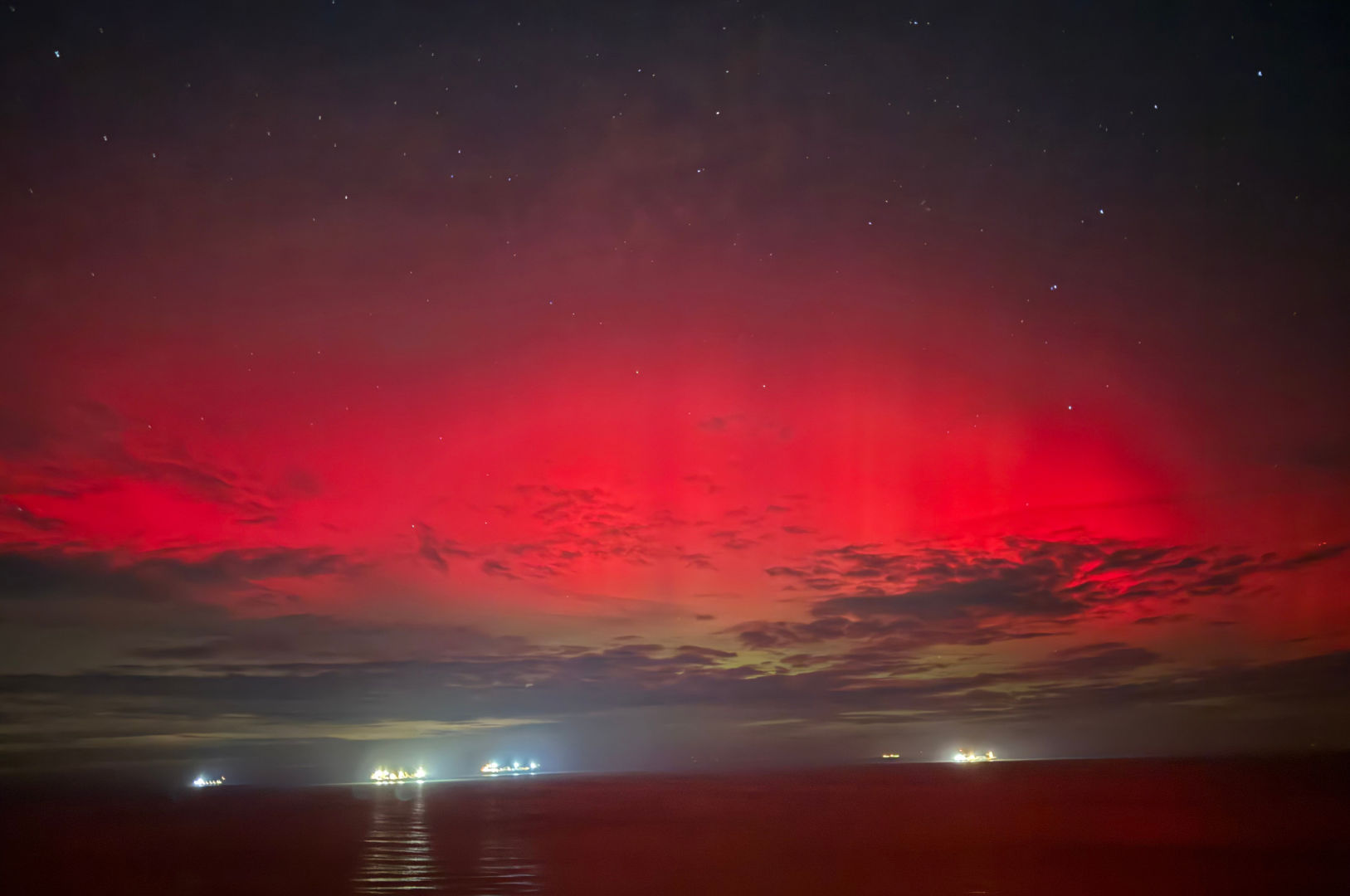 Aurora borealis captured by Manisha Virdi, Margate, Kent, UK, 19 January 2026 using an iPhone 16 Pro
Aurora viewing tips
North is the best direction to look
Get away from light pollution to a darker spot
Look towards the northern horizon after sunset
Best time to see the aurora is between 22:00 and 02:00, local time.
The Moon is out of the way this weekend, increasing chances of seeing a display
Online resources for predicting aurora
If you see or photograph the aurora this weekend, share your observations and images with us by emailing contactus@skyatnightmagazine.com