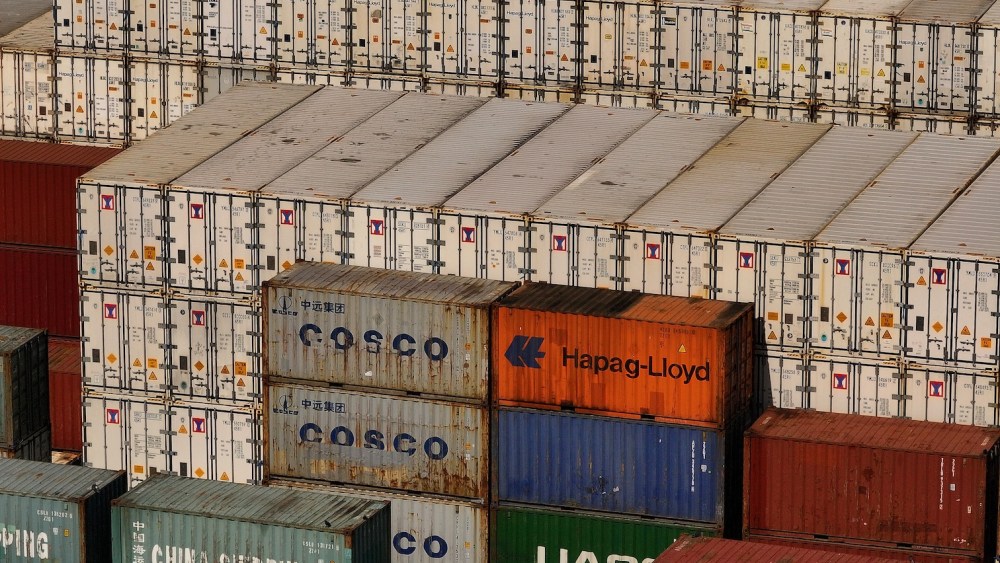
The Trump administration’s aggressive and escalating tariffs on foreign imports haven’t narrowed the United States’ trade gap with other countries. In fact, import and export data from the U.S. Census Bureau and the U.S. Bureau of Economic Analysis reveals that America’s deficit reached a 17-month high in August.
According to the federal government, the U.S. trade deficit grew significantly month over month—by 13.7 percent—hitting a whopping $105.6 billion, the highest level seen since March 2025. July itself was a low point, with the deficit at $88.6 billion, the highest seen in a year, suggesting that the trend is only deepening.
The data showed that surging imports of oil, gold and computer chips utilized in the development of artificial intelligence were the driving forces behind the massive tipping of the scales. Imports reached a record $420.8 billion in August, up 4.3 percent from July, while exports grew 1.4 percent, hitting $315.2 billion.
States and counties across the U.S. have seen the construction of AI data centers accelerate dramatically in recent months, driving the demand for semiconductors and technology. Meanwhile, America brought in $3.3 billion in crude oil products in August, with the higher prices attributable for continued geopolitical strife that has tied up or constrained the world’s oil supply.
While those factors might explain the rise in certain import volumes, the expansion of the deficit calls into question President Donald Trump’s overall tariff strategy. The president has said consistently that the strategy was designed to drive manufacturing back to the U.S. while limiting reliance on offshore competitors.
Demand for U.S. manufacturing has indeed grown. The Institute for Supply Management’s Manufacturing Purchasing Managers’ Index (PMI), released Oct. 1, reached 54.5 in September, showing that the sector continues to expand, though it was down slightly from the 54.6 reading seen in August. Any reading above the 50-point threshold indicates expansion. New orders increased, too, to 55.3 points from 53.7 points.
But there are complicating factors that are stymying that growth, and they are tied in large part to imports.
The Supplier Deliveries Index showed performance slowed for the 10th month in a row (59 from 59.3), while inventories contracted slightly month over month (48.6 from 50.6) and the order backlog increased at a greater rate (56.4 from 51.8). Price pressures ballooned from 71.1 to 77.9 due to the higher cost of steel and aluminum—both heavily tariffed—and other products that are imported from foreign partners to support the manufacturing sectors, including oil.
Canada’s accelerated exports to the U.S. market provide a compelling case study for how tariffs can actually precipitate the driving up, not drawing down, of imports—and the widening of a trade gap.
The Canadian government’s national statistics office released data this week showing that the U.S. imported 8.1 percent more from Canada in August than the month prior, with importers rushing to bring orders in under the wire before Trump’s latest round of punishing duties took effect on Aug. 22. At the same time, Canada’s imports from the U.S. fell 2.5 percent.
As such, Canada’s trade surplus with the U.S. widened substantially in August to $11.2 billion, a $5.1 billion increase from the previous month, data showed on Tuesday.
The administration hit more than $20 billion in Canadian imports, including textile and apparel products, with 50 percent tariffs following a deterioration in already strained trade talks. Canada hit back with its own analogous duties targeting the same value of U.S.-originating goods, with tariffs set between 15 percent and 50 percent.
Importers were eager to avoid the massive duty hike, so they likely pulled forward planned shipments. Canada’s own retaliatory duties took effect on Sept. 8, but the August data shows Canadian consumers began limiting their imports from the U.S. far before that. A wave of Canadian pride and an appetite for domestically produced goods has taken hold over the course of recent months, prompting the nation’s shoppers to break with their usual buying patterns.
At the same time, Canada’s government has been hard at work forging trade relationships with other offshore partners as it seeks to reduce reliance on its closest trading partner and biggest export market. The effort is paying off; Canada’s overall trade surplus with the rest of the world widened by $4.2 billion in August, with exports rising by a total of 2.5 percent to $77.91 billion, and imports dropping by 2 percent.