
Moving to add a second major resource base to a rare earth supply chain already spanning Australia and Malaysia, Lynas Rare Earths Ltd. has entered a binding agreement to acquire Meteoric Resources Ltd., adding its flagship Caldeira project in Brazil, reported as the largest known ionic clay rare earth resource outside China.
Long concentrated in China, the global rare earth supply chain has increasingly become the focus of efforts to develop alternative sources of the materials used in permanent magnets, advanced manufacturing and defense technologies.
Outside that dominant supply base, Australia has emerged as one of the more established sources of rare earth production, with material mined domestically and shipped into downstream processing networks serving customers beyond China.
Lynas Rare Earths, which operates the high-grade Mt Weld deposit in Western Australia and a rare earth processing and separation facility in Malaysia, anchors Australia’s rare earth sector.
With that system already supporting commercial production, the company’s “Towards 2030” growth strategy has increasingly turned toward expanding the resource base feeding those operations, both through continued development at Mt Weld and additional sources capable of supporting future production.
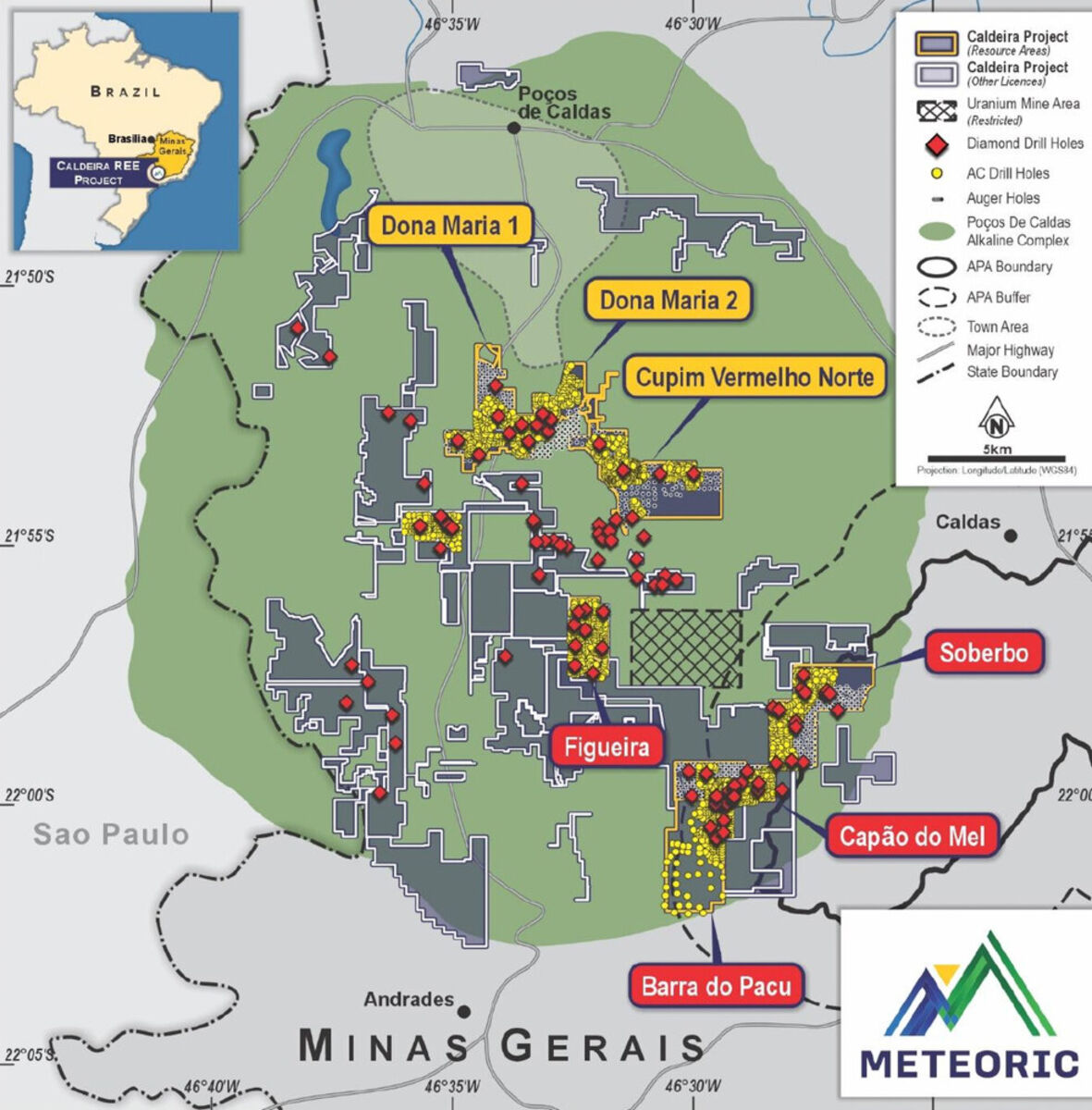
Located in Minas Gerais, Brazil, Meteoric’s flagship Caldeira Rare Earth Project would provide that additional source while diversifying Lynas beyond the hard-rock resource currently being mined at Mt Weld.
Containing both light and heavy rare earths, Caldeira hosts what Meteoric reports as the largest known ionic clay rare earth resource outside China under Australia’s Joint Ore Reserves Committee reporting standards, including an estimated 802,000 metric tons of neodymium-praseodymium oxides and 41,000 metric tons of dysprosium-terbium oxides.
Already advanced through a definitive feasibility study completed earlier this year, the proposed mine at Caldeira is designed around average annual production of roughly 3,862 metric tons of neodymium-praseodymium and 127 metric tons of dysprosium-terbium over its operating life.
Combined with Lynas’ existing estimates, the Brazilian operation would increase the company’s reported measured and indicated rare earth resources by roughly 79% and its ore reserves by about 26%, while establishing a second major source of future feedstock alongside Mt Weld.
Under the proposed deal, Meteoric shareholders would receive Lynas shares in exchange for their holdings, putting the acquisition at roughly A$968 million ($672 million).
Backing the transaction, Meteoric’s board has unanimously recommended shareholders approve the acquisition in the absence of a better offer and subject to an independent review concluding the deal remains in their best interests.
Describing the acquisition as part of Lynas’ effort to add both resources and production scale, Lynas Chair John Humphrey said combining Caldeira with Mt Weld would broaden the company’s position across the global rare earth supply chain.
“This will deliver on our Towards 2030 growth objective of adding resource and scale,” Humphrey said. “Expanding our operations into a new country will help Lynas maintain its leading position in the global rare earths supply chain and meet increased customer demand for rare earth materials.”
Lynas says Caldeira could eventually supply its existing downstream operations in Malaysia, while the company also plans to study the potential for additional rare earth processing in Brazil.
During development, Lynas expects Caldeira to require more than $500 million in capital and has agreed to provide Meteoric with up to A$110 million ($76 million) in interim funding to continue advancing the project while the acquisition moves through the approval process.
Before the transaction can be completed, Meteoric shareholders must approve the deal, along with the court and any required Brazilian regulators overseeing the change in control of critical and strategic mineral rights.
Under the current schedule, Meteoric expects to send shareholders additional transaction materials in December, hold a vote in January and, if the required approvals are secured, complete the acquisition by March 2027.