
After Tesla added more panels and three batteries to a home that already had solar, the owner ran into an unexpected situation: the upgraded system was producing power before utility sign-off, but output dropped noticeably after the batteries filled.
Here’s what to know
Posting on Reddit, the homeowner said a technician told them, “When everything was done the technician told me everything’s up and running,” and they later noted that “my panels’ production is greatly reduced when my batteries are full.”
 Photo Credit: Reddit
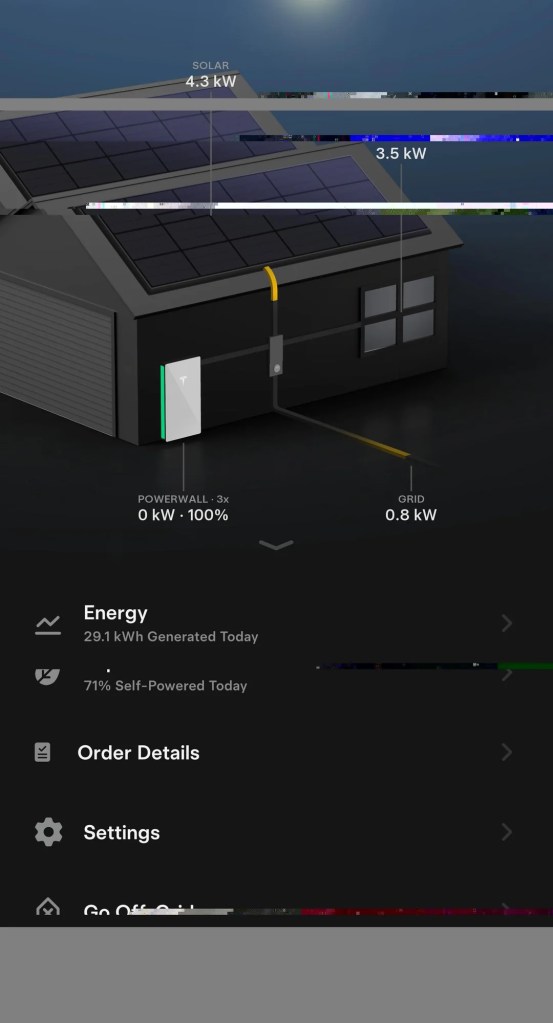 Photo Credit: Reddit
Before permission to operate, or PTO, is granted, commenters said a system may still power the house and fill its batteries, even though excess electricity generally cannot be sent back to the utility.
“No PTO means you cannot export energy to the grid. The system will self generate and charge your powerwalls. Once the power walls are full, if your demand does not exceed what your panels are producing, the system will clip the excess energy instead of exporting it,” one commenter explained.
So if the batteries are full and the house is not using all the available solar power, the system limits production rather than feeding leftover electricity to the grid.
Some homeowners said the interconnection wait can stretch far longer than expected.
“Took me 16 months for PPTO thanks to transformer replacement,” one commenter wrote.
Another said, “Same situation, im going on 13 months now.”
Going solar is one of the best ways to save money on home energy, and trying EnergySage can help homeowners get free installation estimates and compare quotes before signing a contract.
More background
PTO is the utility’s final sign-off allowing a system to export electricity safely to the local grid. Until that happens, installers often leave new equipment in a no-export mode, which lets homeowners use some of their own solar power without sending surplus energy outward.
Because export credits do not begin until the utility approves the interconnection, a no-export setup can still trim grid use and lower bills, especially in homes with batteries, without delivering the full financial benefit many people associate with rooftop solar.
Homes with older, already approved solar equipment can make the situation even murkier. Commenters said the original system may keep generating normally, while the newly added panels connected to the batteries may be throttled back once charging is complete.
More From EnergySage
💡Go deep on the latest news and trends shaping the residential solar landscape
A commenter who suggested switching the app to indicate PTO had already been granted was warned by another user, who said exporting power before approval could put utility workers at risk.
What can be done?
With EnergySage’s help, the average person can save up to $10,000 on solar purchases and installations. You can also use EnergySage’s solar map to see the average cost of a home solar panel system on a state-by-state level, along with details on solar panel incentives for each state. Together, these resources can help homeowners get the best price for rooftop solar panels and access available incentives.
Adding battery storage to a solar setup is one of the best ways to protect your home during outages, save money on energy, and go off-grid. It can also make pre-PTO periods more useful by storing daytime power for later use instead of wasting as much potential generation. You can explore EnergySage for information about home battery storage options, including competitive installation estimates.
Where can I learn more?
Situations like this sit at the intersection of Tesla batteries, residential solar growth, and how home systems interact with the grid.
• Homeowners are testing alternatives to Tesla’s once-dominant energy backup tech for blackout protection.
• In Utah, Rocky Mountain Power’s grid-connected residential solar power systems rewarded homeowners for sharing stored energy.
• Tesla and IronRidge targeted the cost of rooftop solar with a streamlined mounting system.
• Tesla says 600 solar neighborhoods now operate through its home builder program.
Get TCD’s free newsletters for easy tips, smart advice, and a chance to earn $5,000 toward home upgrades. To see more stories like this one, change your Google preferences here.
