
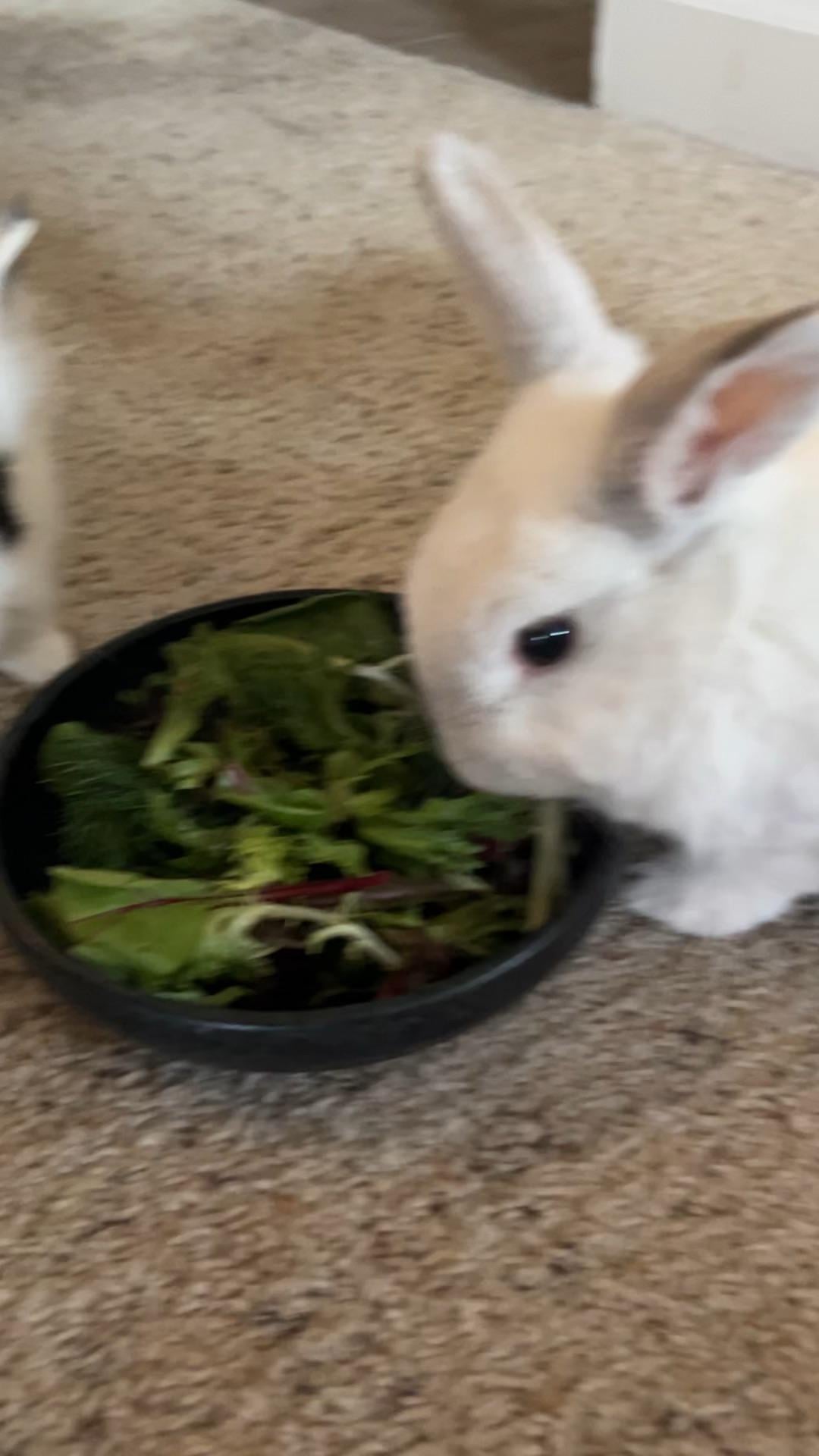
I’ve realized that there are not a lot of personal resources online about tracheal collapse in rabbits, so I’m writing about my experience in the case it helps another rabbit parent!
Tracheal collapse is not uncommon in small dogs, but it is extremely rare in rabbits. It is not to my current knowledge if tracheal collapse is genetic or if it’s more influenced by physical trauma/environmental factors. My vet says that Ruby’s cause is unknown. It could be genetics. It could be because she loves to run into my legs while I’m walking. Either way, tracheal collapse is said to be progressive and incurable in dogs.
I adopted Ruby from a shelter when she was estimated to be around less than 2 years old. She is a hotot, spotted, dwarf, lionhead mix. She did not display any symptoms of tracheal collapse until less than 1 year into adoption. Since adoption, she’s full of life and is a very silly and spunky girl. I noticed one day that she started to snort/cough on water more often about 9 months into adoption. She did that a couple other times during the year so I did not think much of it. Then she started exhibiting some whistling noises and sneezing. I thought it was a result of her snorting on water. However, things escalated about 2-3 weeks later when I noticed that she was hiding for longer periods and started to choke on air while lying down. It was weird because she was still sprinting, doing binkies, eating voraciously, and being playful despite her symptoms. My first thought was that she had contracted some sort of respiratory disease somehow or got something stuck in her respiratory system.
The initial vet visit at an exotic pet clinic had the vet stumped. We did xrays and did not find anything (costed about $600). The vet prescribed antibiotics to try for a week. The antibiotics seemed to work temporarily but did not improve her symptoms long-term. In the end, they recommended a CT scan (costed about $2k).
In the second visit to the vet (1 month after first appointment), Ruby was prepped for the scan. We found out that she did not react well to anesthesia because being in that state made it harder for her to oxygenate well with what was happening to her trachea. The vet decided against doing a stain for further testing due to Ruby’s state. The diagnosis from the regular CT scan concluded she is having a tracheal collapse. Following that diagnosis, the vet prescribed daily Metacam to prevent inflammation of her trachea. The vet also gave me an antibiotic and gabapentin since we were all playing her diagnosis by ear. Ruby was recently suggested to go on Theophylline (bronchodilator) in this year’s routine check up.
Surgery was suggested, but I decided against it personally. The quote was about $15k (not including possible over-night stays for observation or checkups), the drive to the surgery clinic was 3 hours, pet insurance (N*tionwide) refused to cover her condition, and I realized after more research that it was not a end-all-be-all solution to tracheal collapse. I did not want Ruby to endure all of that stress, especially with her initial response to anesthesia during her CT scan. She still has a very great quality of life despite her breathing issues.
A year later now, Ruby is still living a very great life! She’s 4 now! Although she does make squeaking/snorting sounds on the regular now, she’s still very active, silly, and a voracious eater. The only times trachea collapse really affects her are if she sleeps in a certain position that limits her breathing or if she’s incredibly stressed (like at a vet visit). It was very hard, emotionally and physically, to get used to her “new normal”. There were times where her noisiness would keep me up at night. There were times where she would choke loudly on air because she slept the wrong way. She also roams more during her nap hours since she wakes up more frequently. I was concerned about her quality of life all the time because I did not know how long a rabbit can last with this diagnosis. But she prevails, and I hope to have her for a very long time!
by vroooomz